7 OBD1 to OBD2 Adapters Ranked by Connector, Not Popularity
Published October 29, 2026
As an Amazon Associate we earn from qualifying purchases. This never changes which products we recommend.
The XJVSS OBD1 to OBD2 Adapter leads this guide because its 12-pin to 16-pin conversion covers the GM ALDL connector used on a large share of pre-1996 American cars, and its 16-inch molded cable is the most broadly useful single adapter here. Every pick is a passive cable: it changes the plug, and your scan tool must still support the older protocol.
The real decision is connector family, not brand. A Ford 7-pin, Mazda 17-pin, BMW 20-pin or Chrysler 6-pin car needs its own cable, and a tool that reads OBD1 natively can skip the cable entirely. Match the connector to your car first, then decide whether a cable for the tool you own beats buying a dual-era scan tool.
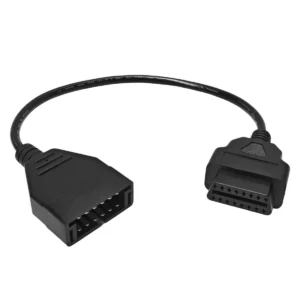 Best OverallXJVSS OBD1 to OBD2 AdapterGM 12-pin ALDL owners with a capable scan tool7.9/10
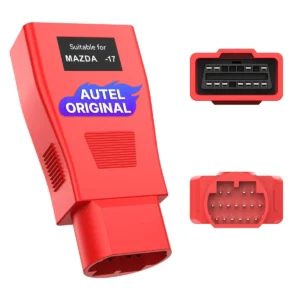 Best for Mazda 17-PinAutel 17 Pin OBD1 Adapter for MazdaClassic Mazda owners with the 17-pin socket7.8/10
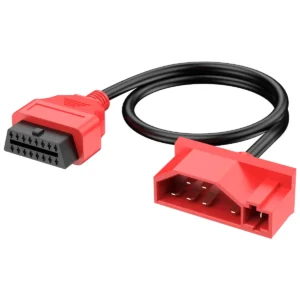 Best for Early Ford EFIAutel 7 Pin OBD1 Adapter for Ford1985-1991 Ford EFI owners7.1/10
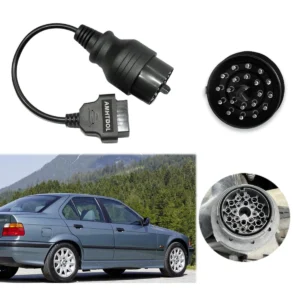 Best for Pre-2000 BMWAMHTDOL BMW 20 Pin Adapter1990s BMW owners with the round 20-pin port7.0/10
Table of contents9 sections · tap to expand
At a glance
Our top picks compared
| Product | Best for | Type and size | Where to buy |
|---|---|---|---|
| 1. XJVSS OBD1 to OBD2 Adapter Best Overall 7.9/10 | GM 12-pin ALDL owners with a capable scan tool | Cable / connector, 16.0 inches | Budget Check price |
| 2. Autel 17 Pin OBD1 Adapter for Mazda Best for Mazda 17-Pin 7.8/10 | Classic Mazda owners with the 17-pin socket | Cable / connector, 726 in | Premium Check price |
| 3. Autel 7 Pin OBD1 Adapter for Ford Best for Early Ford EFI 7.1/10 | 1985-1991 Ford EFI owners | Cable / connector, 247 in | Premium Check price |
| 4. AMHTDOL BMW 20 Pin Adapter Best for Pre-2000 BMW 7.0/10 | 1990s BMW owners with the round 20-pin port | Cable / connector, 151 in | Mid-range Check price |
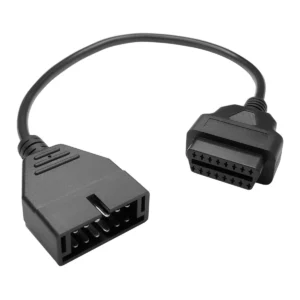 5. Hirificing OBD1 to OBD2 GM Adapter Best GM Alternative 6.9/10 | GM owners who want a longer extension cable | Cable / connector, 841 in | Mid-range Check price |
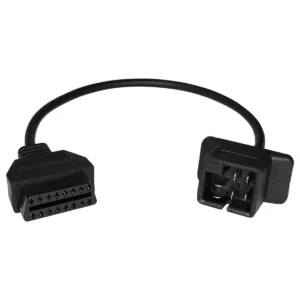 6. SWQS Chrysler 6 Pin Adapter Best for Chrysler, Dodge and Jeep 6.3/10 | 1990s Chrysler-family owners with the 6-pin port | Cable / connector, 1.4 inches | Budget Check price |
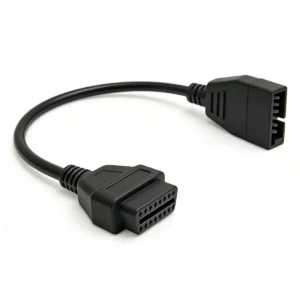 7. Girnfac OBD1 to OBD2 Adapter Best Budget Pick 6.1/10 | Occasional 12-pin diagnostics on a tight budget | Cable / connector, 1.84 inches | Budget Check price |
Score: our 0-10 rating from fit for this use, buyer ratings, review volume, completeness of the product details and availability. It is not a lab test.
Buying advice
How to choose an OBD1 adapter cable for your car
Start with the connector on your car, not the cable's popularity
The connector family decides the purchase. A GM 12-pin ALDL cable will not fit a Ford 7-pin, Mazda 17-pin, BMW 20-pin or Chrysler 6-pin socket, and no single cable in this guide covers all of them. Count the pins and note the housing shape before ordering, then buy the cable whose stated connector matches. If your car uses a Honda 3-pin or 5-pin or a Toyota OBD1 connector, none of these cables applies and you need a make-specific solution.
Confirm your scan tool speaks the older protocol
An adapter only converts the plug, so the tool behind it must support J1850 VPW, J1850 PWM, ISO 9141-2 or KWP2000 as well as OBD-II. Many inexpensive OBD2 code readers list only OBD-II and CAN support and will fail to communicate through any adapter. Check the tool's published vehicle coverage for your model year before you spend on a cable; if it does not list pre-1996 support, a dual OBD1/OBD2 scan tool is the more honest purchase.
Weigh a cable against a tool with OBD1 built in
A cable costs far less than a scan tool, which makes it the right call when you already own a capable tool and work on one older car. A small shop or a buyer inspecting several pre-1996 vehicles is better served by one tool that reads both eras natively, since it avoids juggling five connector families. Price the cable against how often you will actually use it, and remember that flash codes read with a jumper wire cost nothing at all.
Judge the build and the length
Molded ends, corrosion-resistant pins and a cable long enough to reach from the port to where you want to stand matter more than brand name on a passive part. Published lengths in this guide range from a few inches to well over 100 inches, so check the figure rather than assuming. A longer cable doubles as an extension that keeps repeated plugging out of the car's original connector, which reduces wear on a 30-year-old socket.
Our picks
OBD1 adapter cables ranked by connector coverage and build
Best Overall
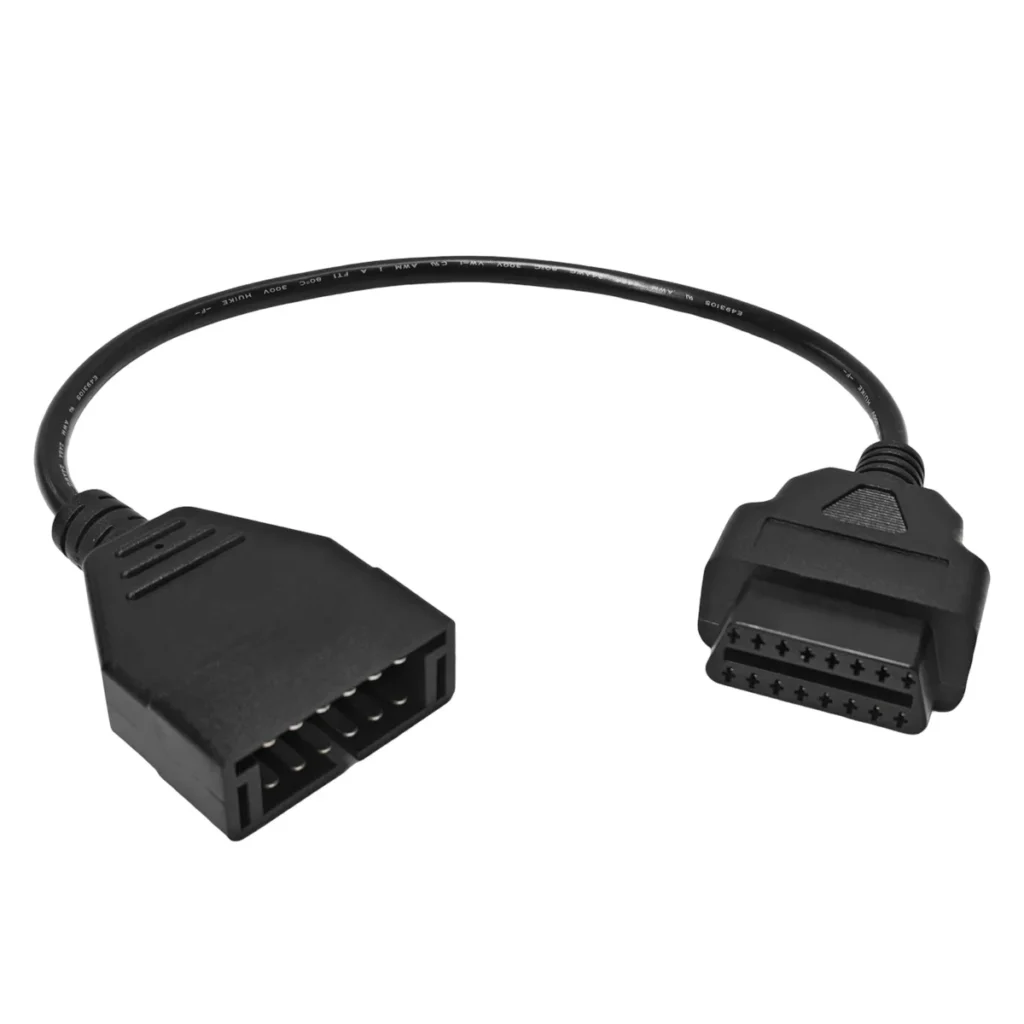
XJVSS OBD1 to OBD2 Adapter
- Cable / connector
Best for: GM 12-pin ALDL owners with a capable scan tool
Skip if: Your car uses a 17-pin, 20-pin, 7-pin or 6-pin OBD1 socket instead of the 12-pin ALDL.
Price range: Budget
Check price on AmazonPaid link. We may earn a commission.
Best Overall because it converts the GM 12-pin ALDL socket to a standard 16-pin OBD2 port in one plug-and-play cable, the widest-use OBD1 connector in American cars.
What matters in daily use
The XJVSS adapter is a 16.0-inch cable with a 12-pin OBD1 male plug on one end and a 16-pin OBD2 female socket on the other, so a scan tool built for the J1962 port can physically reach a GM ALDL connector. Copper cores and a flame-retardant PVC housing are the stated construction, which matters because this cable carries serial data rather than power, and a loose or noisy connection shows up as failed protocol handshakes rather than an obvious break.
The tradeoff is that the adapter changes the plug, not the protocol. A scanner still has to speak the older GM data language to read anything, and many modern OBD2-only tools will connect and then report no communication. Compared with the Hirificing OBD1 to OBD2 GM Adapter, which covers the same 12-pin socket, the XJVSS is the shorter, simpler cable; the Hirificing version is the pick when reach matters more than a compact coil in the glovebox.
Specifications
| Type | Cable / connector |
|---|---|
| Connector | 12 PIN |
| Length | 16.0 in |
Pros
- Converts the common GM 12-pin ALDL socket to a standard 16-pin OBD2 port
- Plug-and-play design needs no wiring or extra tools
- Copper cores and flame-retardant PVC housing for stable signal
- Compact 16.0-inch length stores easily in a tool bag
Cons
- Does not add protocol support; the scan tool must read older GM data
- Only fits 12-pin vehicles, not Mazda, Ford, BMW or Chrysler ports
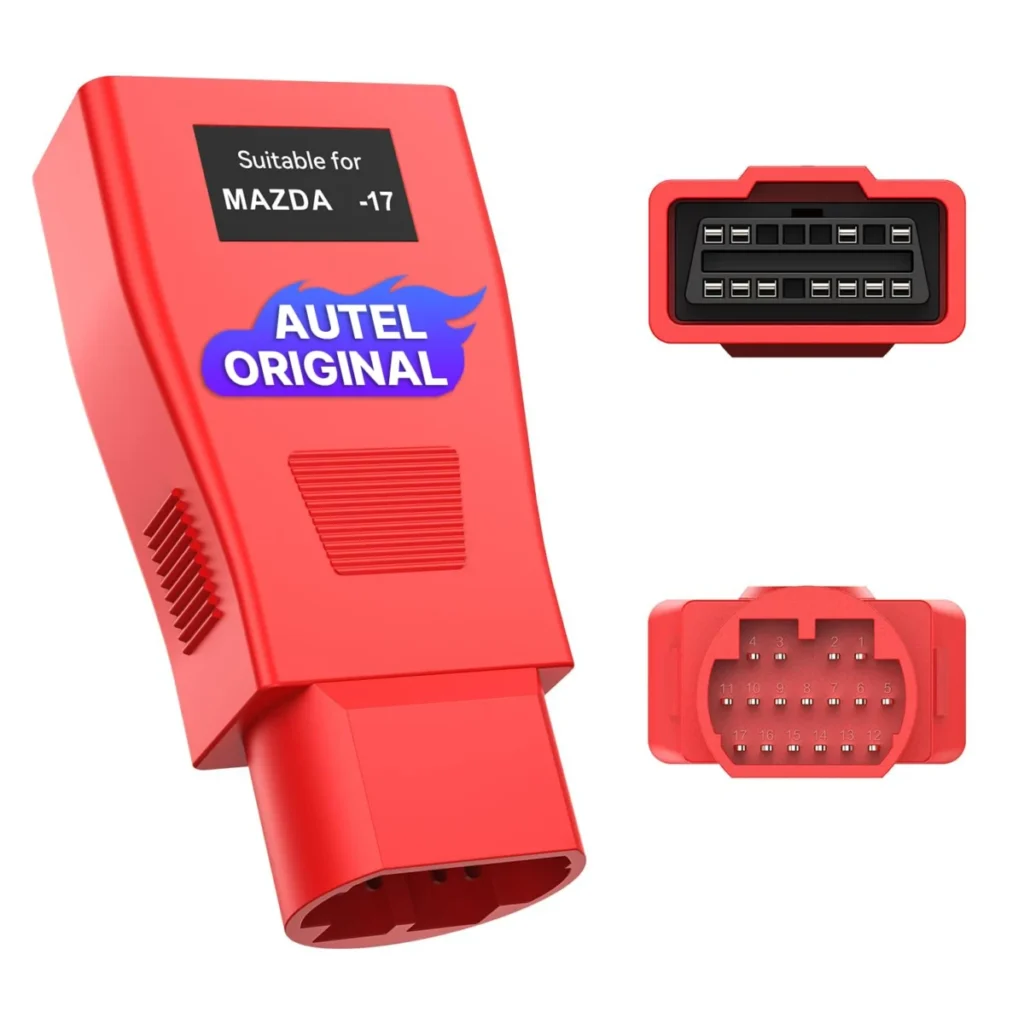
Best for Mazda 17-Pin
Autel 17 Pin OBD1 Adapter for Mazda
- Cable / connector
Best for: Classic Mazda owners with the 17-pin socket
Skip if: Your scan tool does not list your Mazda model or its older protocols as supported.
Price range: Premium
Check price on AmazonPaid link. We may earn a commission.
Best for Mazda 17-Pin because Autel builds the adapter specifically for the Mazda 17-pin socket, turning it into a 16-pin OBD2 port that a standard scanner can plug into.
What matters in daily use
The 17-pin male connector mates with the Mazda-specific diagnostic socket, and the 16-pin female end accepts any OBD2 scan tool. Autel states the adapter handles the OBD1 translation itself once connected, so the scanner side sees a normal OBD2 port. The 1-year warranty is the longest stated coverage among the picks here, which suits a part that lives under the hood and gets plugged and unplugged repeatedly.
Compatibility is the catch, and Autel says so directly: the adapter only makes the physical connection, and reading data still depends on whether the scan tool supports the specific Mazda model and its protocols. That makes it a narrower buy than the XJVSS OBD1 to OBD2 Adapter, which covers the GM 12-pin socket. If your Mazda has the 17-pin port, this is the correct fit; if it has a 16-pin OBD2 port already, you need no adapter at all.
Specifications
| Type | Cable / connector |
|---|---|
| Makes covered | Mazda |
| Connector | 17 PIN |
| Length | 726 in |
| Warranty | 1-year warranty |
Pros
- Custom-fit 17-pin connector for classic Mazda diagnostic sockets
- Handles OBD1 translation automatically once plugged in
- Automotive-grade plastic and heavy-duty connectors
- Backed by a stated 1-year warranty
Cons
- Diagnostic functions depend on the scan tool supporting your Mazda
- Fits only Mazda 17-pin ports, nothing else
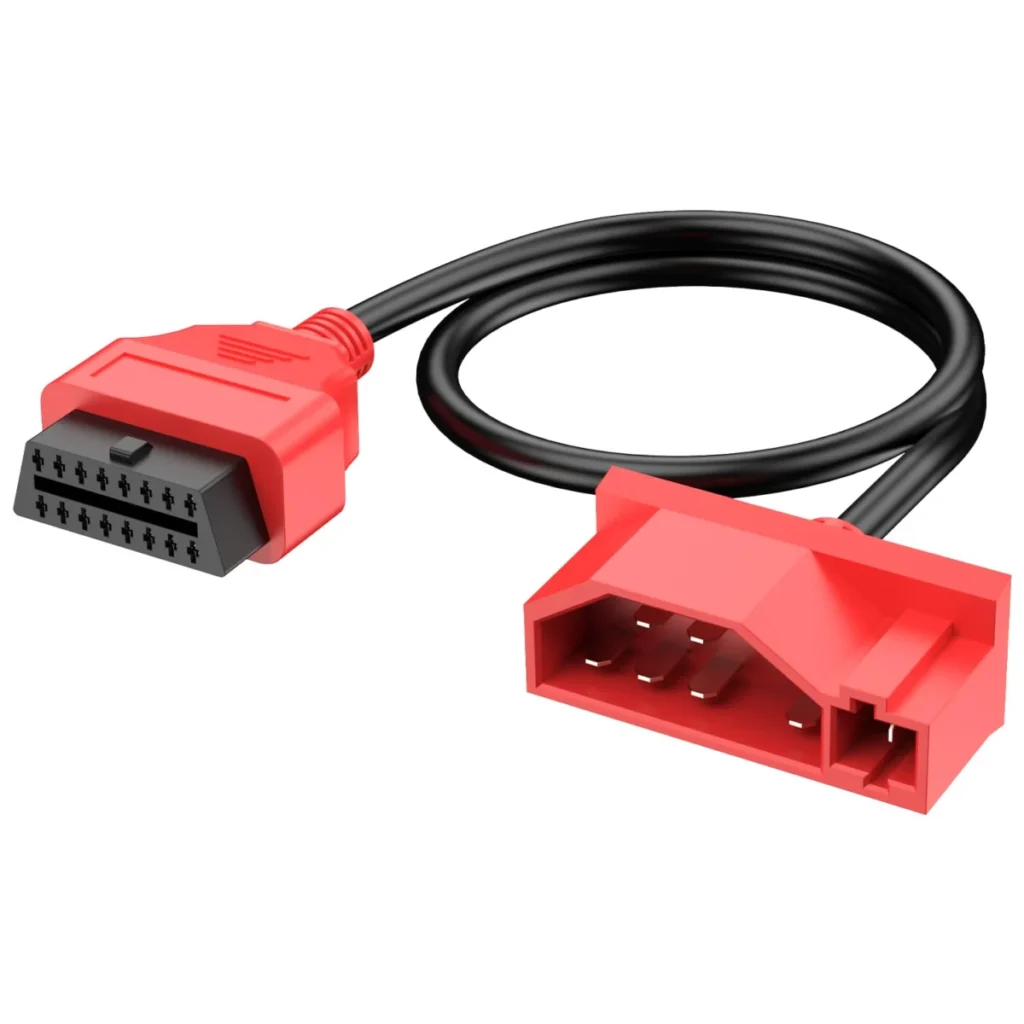
Best for Early Ford EFI
Autel 7 Pin OBD1 Adapter for Ford
- Cable / connector
Best for: 1985-1991 Ford EFI owners
Skip if: Your scanner only supports OBD2 protocol or cannot diagnose 1985-1991 Ford vehicles.
Price range: Premium
Check price on AmazonPaid link. We may earn a commission.
Best for Early Ford EFI because it converts the 7-pin OBD1 port on 1985-1991 Ford EFI cars to a 16-pin OBD2 socket, a connector almost no generic adapter covers.
What matters in daily use
Autel targets a narrow window: Ford EFI vehicles from 1985 to 1991 with the 7-pin diagnostic port usually found below the brake master cylinder. The cable ends in a 16-pin OBD2 connector, so a universal scanner can physically attach. Autel is explicit that this is interface conversion only, and that the scanner must support early Ford protocols such as EEC-IV for any data to flow.
That limitation is the whole story for this pick. The 16 PIN connector value describes the scanner end, and the 247 in length gives more reach than the XJVSS OBD1 to OBD2 Adapter, which helps when the port sits deep in the engine bay. Buyers should expect mixed results: the adapter does its job when the tool behind it speaks EEC-IV, and does nothing when it does not.
Specifications
| Type | Cable / connector |
|---|---|
| Makes covered | Ford |
| Connector | 16 PIN |
| Length | 247 in |
Pros
- Covers the 7-pin Ford EFI port that generic adapters skip
- Longer cable reaches ports set below the brake master cylinder
- Polished connectors for stable data transmission
- Stated 1-year warranty and 30-day replacement window
Cons
- Requires a scanner that supports early Ford EEC-IV protocols
- Not compatible with all Autel scanners, per the manufacturer
- Fits only 1985-1991 Ford EFI vehicles
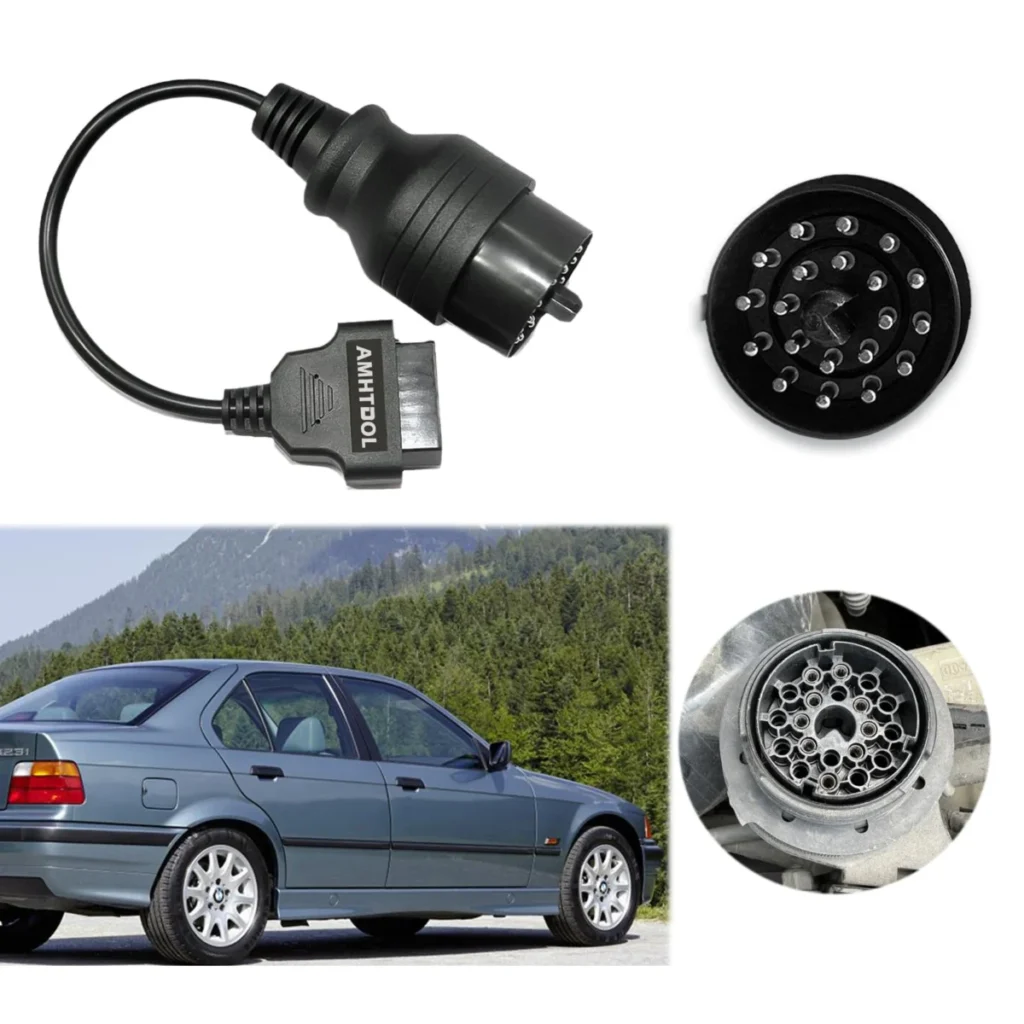
Best for Pre-2000 BMW
AMHTDOL BMW 20 Pin Adapter
- Cable / connector
Best for: 1990s BMW owners with the round 20-pin port
Skip if: Your car is not a 1990s BMW with the round 20-pin connector.
Price range: Mid-range
Check price on AmazonPaid link. We may earn a commission.
Earns Best for Pre-2000 BMW because it converts the round 20-pin socket to the standard 16-pin OBD2 plug, letting a modern scan tool reach 1990s BMWs that have no OBD-II port.
What matters in daily use
A round 20-pin socket under the hood is what this cable solves: the AMHTDOL adapter is a 20-pin to 16-pin converter aimed at BMWs built before the OBD-II mandate, with the manufacturer listing coverage from 1992 to 2001 across the E36, E46, E39, E38, Z Series and E53 X5. That range matters because those cars carry the round diagnostic connector rather than a dash-mounted 16-pin port, so a current scan tool has nowhere to plug in without a converter.
The published length of 151 inches gives enough reach to run the cable from the engine bay connector to a tool resting outside the car.
The tradeoff is that the adapter only changes the shape of the plug, not the language the car speaks. Whether a BMW of this era answers depends on the scan tool supporting the older protocols, and the listing frames the cable as needing a diagnostic device to work at all.
Specifications
| Type | Cable / connector |
|---|---|
| Vehicle years | 1996 – 2001 |
| Makes covered | BMW |
| Connector | 20 PIN |
| Length | 151 in |
Pros
- Reaches 1990s BMW models with no factory OBD2 port
- Long cable keeps the scan tool clear of the engine bay
- Plug-and-play design needs no wiring changes
- Covers several BMW chassis families in one cable
Cons
- Works on BMW only, not a universal adapter
- Diagnostic success depends on the scan tool's protocol support
- Not a scanner; a separate diagnostic device is required
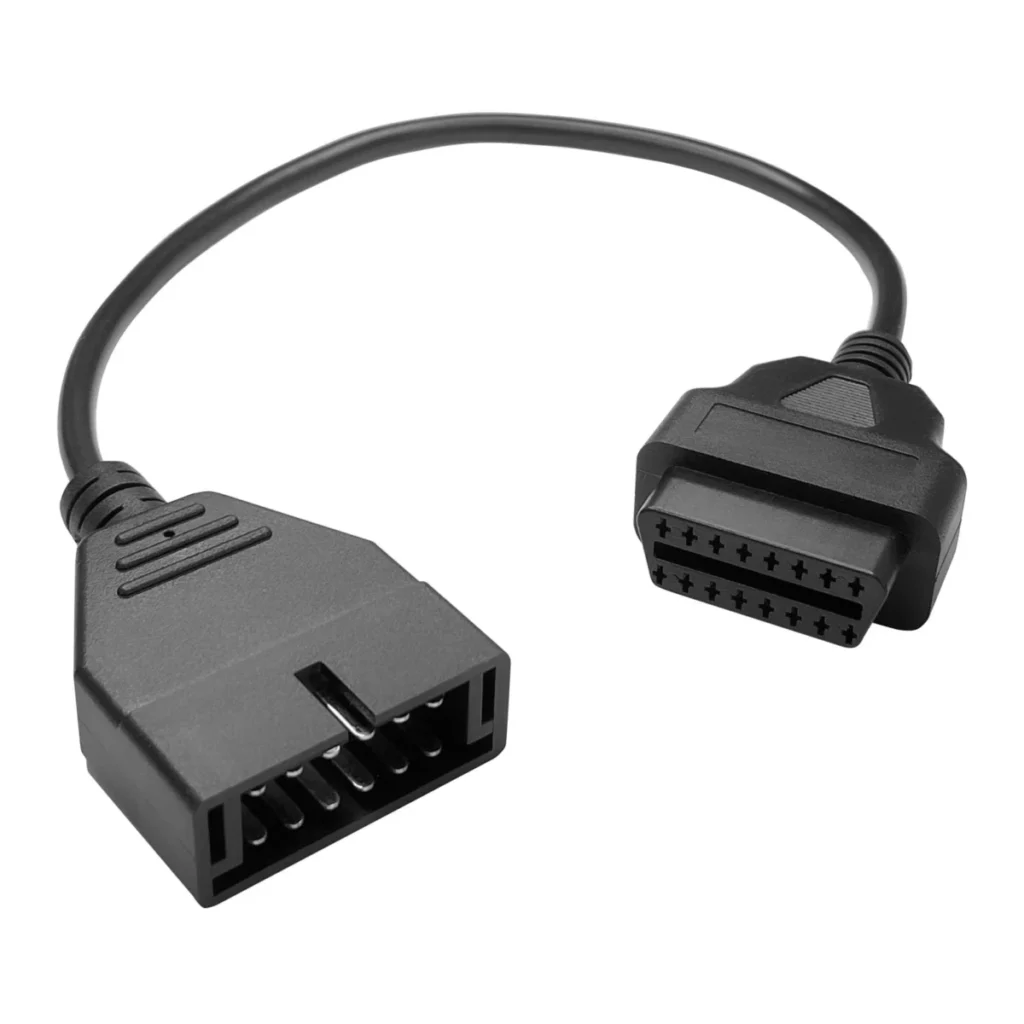
Best GM Alternative
Hirificing OBD1 to OBD2 GM Adapter
- Cable / connector
Best for: GM owners who want a longer extension cable
Skip if: You want a compact adapter or your car uses a non-GM connector.
Price range: Mid-range
Check price on AmazonPaid link. We may earn a commission.
Takes Best GM Alternative because it does the same 12-pin to 16-pin job as the top pick but in a longer cable, giving GM owners a second option when reach matters more than anything else.
What matters in daily use
Reach is what separates the Hirificing adapter from the XJVSS OBD1 to OBD2 Adapter: it converts a GM 12-pin OBD1 socket into a standard 16-pin OBD2 port, and its published length of 841 inches dwarfs the 16.0 inches listed for the top pick. That suits a setup where the scan tool sits well away from the diagnostic connector. The manufacturer also notes that multiple cables can be daisy-chained for longer distances, which is useful for a shop working around a lift or a bench.
The main tradeoff is that length does not add capability. This is still a passive cable, and the listing is explicit that it is not a scanner or diagnostic tool, so the car only responds if the connected tool supports the older GM protocols.
The housing is metal and PVC with molded connectors, which the manufacturer presents as durable for repeated plugging. Against the XJVSS pick, the Hirificing gives more cable but carries a mixed buyer record, so a buyer who wants the shortest, simplest path to a GM port may prefer the top pick.
Specifications
| Type | Cable / connector |
|---|---|
| Makes covered | GM |
| Connector | 12 PIN |
| Length | 841 in |
Pros
- Very long cable keeps the tool far from the port
- Daisy-chaining is possible for extra reach
- Plug-and-play with no driver or wiring work
- Acts as a sacrificial extension to spare the car's port
Cons
- Not a scanner; needs a protocol-capable tool
- Mixed buyer ratings suggest inconsistent experiences
- Long cable is awkward to store in a small cabin
Best for Chrysler, Dodge and Jeep
SWQS Chrysler 6 Pin Adapter
- Cable / connector
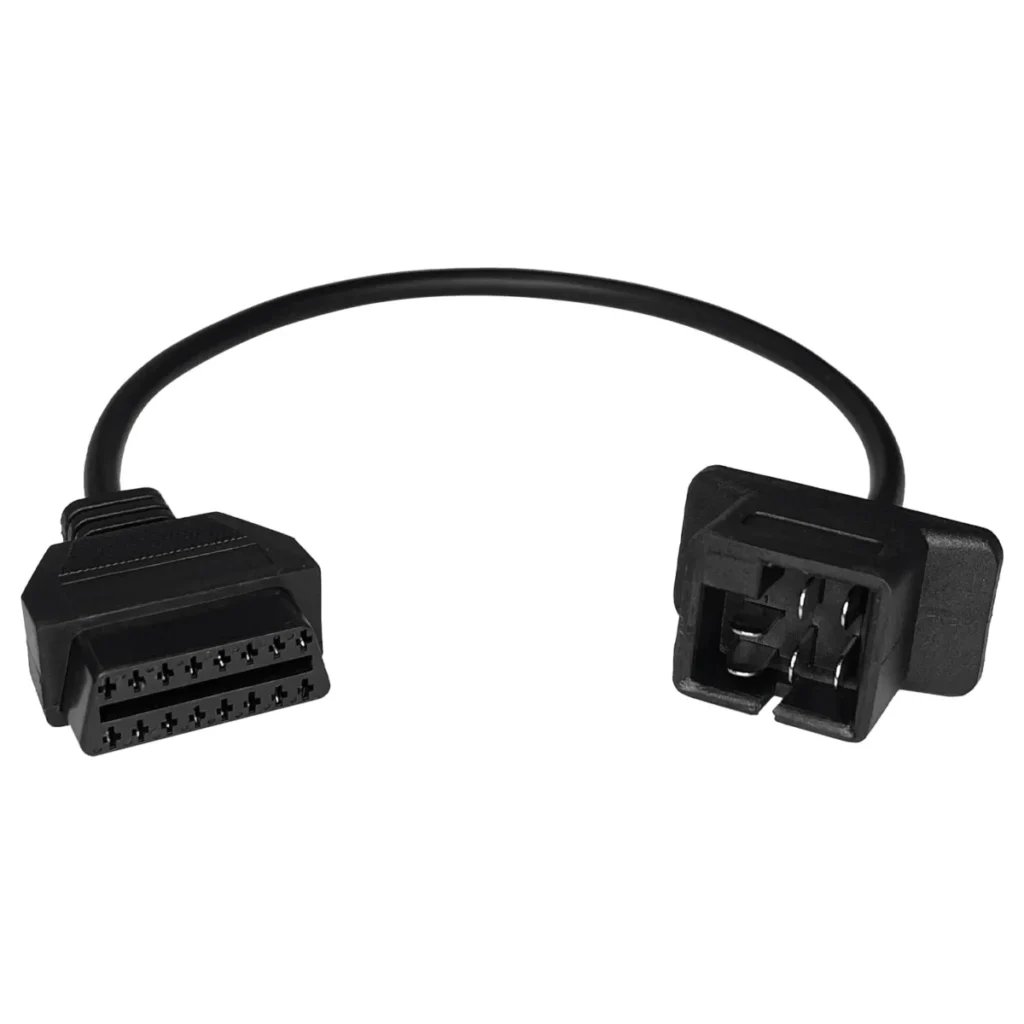
Best for: 1990s Chrysler-family owners with the 6-pin port
Skip if: Your vehicle is a GM, Ford, Mazda or BMW with a different port shape.
Price range: Budget
Check price on AmazonPaid link. We may earn a commission.
Wins Best for Chrysler, Dodge and Jeep by covering the 6-pin OBD1 port those 1990s vehicles used, a connector the GM and BMW adapters in this guide cannot touch.
What matters in daily use
The SWQS adapter converts a 6-pin OBD1 diagnostic port to a 16-pin OBD2 socket for Chrysler, Dodge and Jeep vehicles. That 6-pin shape is the reason this pick exists: the XJVSS OBD1 to OBD2 Adapter and the Hirificing OBD1 to OBD2 GM Adapter both use 12-pin connectors, and the AMHTDOL BMW 20 Pin Adapter uses a round 20-pin plug, so none of them fit a Chrysler-family car.
The molded connector and corrosion-resistant pins are described as built for the heat and vibration of the engine bay.
Buyers should read the length carefully. The published length is 1.4 inches, and the product dimensions of 4.8 x 1.8 x 1.4 inches describe the whole item, so this is a short converter rather than a long extension.
Specifications
| Type | Cable / connector |
|---|---|
| Makes covered | Chrysler, Dodge, Jeep |
| Connector | 6PIN |
| Length | 1.4 in |
Pros
- Fits the 6-pin port other adapters here cannot
- Molded connector suits engine-bay heat and vibration
- Plug-and-play with no splicing or modification
- Covers three Chrysler-family brands with one cable
Cons
- Short 1.4-inch length leaves little room for bulky tools
- Not a scanner; protocol support still comes from the tool
- Compatibility must be confirmed per vehicle before buying
Best Budget Pick
Girnfac OBD1 to OBD2 Adapter
- Cable / connector
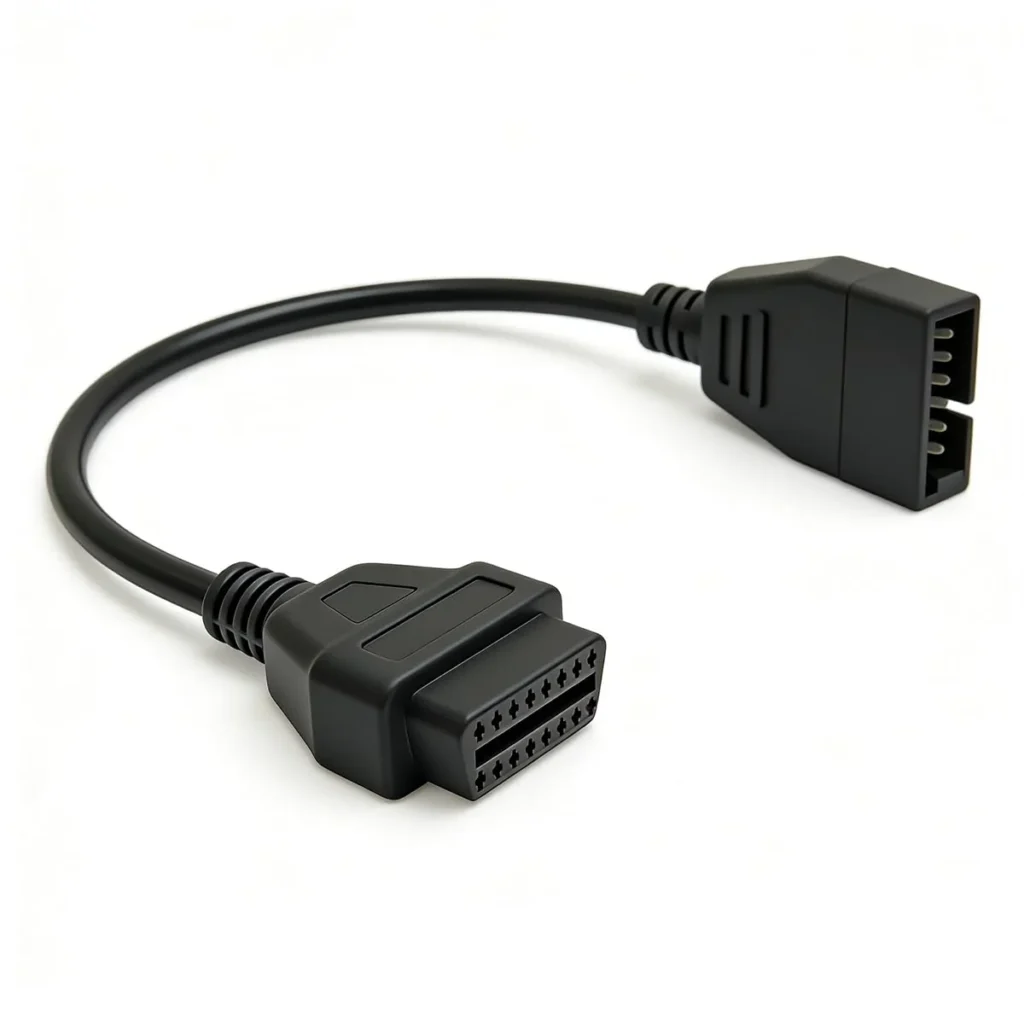
Best for: Occasional 12-pin diagnostics on a tight budget
Skip if: You diagnose 12-pin cars regularly and want a longer, heavier-duty lead.
Price range: Budget
Check price on AmazonPaid link. We may earn a commission.
The Girnfac earns the budget pick because it converts a 12-pin OBD1 socket to the 16-pin OBD2 plug at the lowest commitment, for readers who only occasionally need to read codes on an older car.
What matters in daily use
A 12-pin OBD1 plug on one end and a 16-pin OBD2 socket on the other make the Girnfac a straight male-to-female extension, so an existing OBD2 code reader or scan tool can physically reach a 12-pin vehicle port. The PVC jacket and molded ends suit a cable that lives in a toolbox and gets plugged in a few times a year rather than daily shop use.
Buyers who expect the adapter to unlock ABS or live data on an older car will be disappointed: the car still speaks its older protocol, so the scanner on the other end must support that protocol or it will power up and report nothing. That is the same limit the XJVSS OBD1 to OBD2 Adapter carries, and the reason the XJVSS takes Best Overall is its longer 16.0-inch lead and copper-core construction rather than any diagnostic advantage.
Specifications
| Type | Cable / connector |
|---|---|
| Connector | 12 PIN |
| Length | 1.84 in |
Pros
- Low-cost way to reach a 12-pin OBD1 port
- Plug-and-play, no wiring or tools needed
- Doubles as an extension to spare the car's port
- Compact enough to store in the car
Cons
- Does not translate protocols, only the plug shape
- Short lead compared with the XJVSS adapter
- No stated vehicle list beyond 12-pin sockets
Does an OBD1 to OBD2 adapter change the plug or the protocol?
An OBD1 to OBD2 adapter changes the shape of the plug, not the language the car speaks. The cable turns a 12-pin, 7-pin, 17-pin, 20-pin or 6-pin diagnostic connector into the 16-pin J1962 diagnostic link connector (DLC) that every modern scan tool expects, but the tool on the other end still has to support the older protocol the car uses, such as J1850 VPW, J1850 PWM, ISO 9141-2 or KWP2000.
That distinction explains the most common bad purchase: a generic OBD2 code reader plugged into an adapter on a 1994 car usually powers up and then reports a communication failure. Autel states this plainly for its Ford 7-pin cable, noting the adapter provides physical conversion only and diagnostic success depends on whether the scanner supports earlier protocols. Before buying any cable, confirm your scan tool lists the vehicle year and protocol, not just OBD-II.
Which OBD1 connector does your car use?
Identify the connector before you order, because the pin count and shape differ by manufacturer and the wrong cable is useless. GM vehicles use the 12-pin ALDL connector, Ford used a 7-pin connector on 1985-1991 EFI models, Chrysler, Dodge and Jeep used a 6-pin, BMW used a 20-pin round connector on pre-2000 cars, and Mazda used a 17-pin socket. Honda's 3-pin and 5-pin connectors and Toyota's OBD1 connector are also common on 1990s cars, though no cable in this guide covers them.
Look under the dash near the steering column first, then under the hood near the brake master cylinder or on the inner fender, which is where Ford and several import makers placed it. Count the pins and note the housing shape, then match that to the cable's stated connector. If the car has both a 16-pin DLC and an older connector, the 16-pin port may only serve a subset of modules, so check the service manual before assuming OBD-II coverage.
Decision guide
Cable or dual OBD1/OBD2 tool: which one do you actually need?
The XJVSS and Hirificing cables both convert a GM 12-pin ALDL port to a 16-pin OBD2 socket, so the choice between them comes down to length and buyer feedback rather than function. The XJVSS lists a 16.0-inch length and carries excellent ratings from a small number of buyers, while the Hirificing cable is rated mixed by a moderate number of buyers. Pick the XJVSS for a first purchase and the Hirificing only if its longer listed length suits your setup.
The two Autel cables serve completely different cars and cannot substitute for each other: the 17-pin version is for classic Mazda models and the 7-pin version is for 1985-1991 Ford EFI vehicles. The Ford cable also carries an explicit warning that it will not work with scanners limited to OBD-II, which makes it the clearest example in this guide of why the tool matters as much as the plug. Neither Autel cable helps a GM, BMW or Chrysler owner.
Our process
How we chose our OBD1 to OBD2 Adapter picks
Products were shortlisted from OBD1 adapter cables with published connector types, then ranked by how many pre-1996 vehicles the connector family reaches, whether the listing states the tool requirements honestly, build details such as molded ends and pin material, cable length, warranty terms and buyer feedback. Listings that state only a physical conversion without protocol support were ranked lower unless the connector itself is widely used. No product was tested; the assessment rests on published specifications, design and buyer reports.
Common questions
Frequently asked questions
Will an OBD1 to OBD2 adapter work with any OBD2 scanner?
No. The adapter only converts the physical connector, so the scanner must also support the older protocol your car uses. A reader limited to OBD-II and CAN will usually connect physically and then fail to communicate. Check the tool's published coverage for your model year before buying the cable.
Where is the OBD1 connector on my car?
Most OBD1 connectors sit under the dash near the steering column, but several makers placed them in the engine bay. Ford's 7-pin port on 1985-1991 EFI models is typically below the brake master cylinder, and Mazda's 17-pin socket is under the hood. Check both areas and the service manual.
Can I read OBD1 codes without a scan tool?
Often yes. Many pre-1996 cars flash codes through the check engine light when you bridge the correct diagnostic terminals with a jumper wire, and the count of flashes maps to a two-digit code in the service manual. It costs nothing and confirms whether a fault is stored before you buy any cable or tool.
Do I need an adapter for a 1995 car?
It depends on the car, not the year alone. OBD-II was required on US cars from 1996, so some 1995 models already have the 16-pin DLC while others still use a manufacturer connector. Look at the port: a 16-pin J1962 socket needs no adapter, and a 12-pin, 7-pin or 20-pin connector does.
Can a Bluetooth OBD2 adapter read an OBD1 car?
Almost never. Bluetooth dongles are built around OBD-II and CAN protocols and expect the 16-pin DLC, so adding a plug adapter does not give them OBD1 support. For a pre-1996 car, use a cable matched to the connector plus a scan tool that lists that year and protocol, or read flash codes.
Bottom line
Final verdict
- GM 12-pin ALDL owners with a scan tool that already supports pre-1996 protocols: XJVSS OBD1 to OBD2 Adapter. The XJVSS adapter covers the most common pre-1996 American connector at low cost, and its 16-inch cable is long enough to work comfortably from the port.
- Mazda owners with the 17-pin socket: Autel 17 Pin OBD1 Adapter for Mazda. The Autel Original adapter is the only pick here built specifically for the Mazda 17-pin port, and it carries a stated one-year warranty.
- 1985-1991 Ford EFI owners: Autel 7 Pin OBD1 Adapter for Ford. The Autel 7-pin cable is the only Ford-specific option in this guide, but buy it only if your scanner explicitly supports the earlier Ford protocol.
- Budget-conscious owners doing occasional 12-pin diagnostics: Girnfac OBD1 to OBD2 Adapter. The Girnfac cable is the cheapest 12-pin option here, though its mixed feedback from a small number of buyers makes it a second choice behind the XJVSS.
Final decision
Compare two finalists
Choose the two picks you narrowed down to see who each one suits and the main reason to skip it.
Keep reading
7 Cheap OBD2 Scanners Ranked by What Each Price Actually Buys
The Autel AL319 is our top pick among 7 cheap obd2 scanners, compared on device class, systems read and total cost of,…
Laptop OBD2 Software: 4 Picks and the Adapters They Accept
The Diesel Laptops Nexiq USB Link 3 Wired is our top pick among 4 obd2 software for laptops, compared on adapter compatibility,…

Code Reader vs OBD2 Scanner: Where the Line Falls at Live Data and ABS
Code Reader vs OBD2 Scanner compared on where the line falls: powertrain codes versus other modules and live data, with clear guidance…