OBD vs OBD2 Scanner: What the Names Mean and Which Tool Your Car Needs
Published October 29, 2026
As an Amazon Associate we earn from qualifying purchases. This never changes which products we recommend.
The OBD Scanner vs OBD2 Scanner question has a short answer: OBD2 is the 1996-and-newer standard, and every tool sold for a modern car speaks it. The decision that actually changes what you can do is device class: a Bluetooth OBD2 adapter that runs a phone app, or a handheld code reader with its own screen.
Choose the adapter if you want live sensor data and app-based flexibility; choose the reader if you want a self-contained tool with no phone, no pairing and no app purchase.
The two representative tools here sit at opposite ends of that split. The Veepeak OBDCheck BLE+ is a Bluetooth adapter with no screen that depends on a third-party app, and the Autel AL319 is a wired handheld code reader with a 2.4-inch color display and free lifetime updates. Both connect to the same 16-pin diagnostic link connector (DLC) on any post-1996 car, and neither one repairs anything: they read what the engine computer reports.
Quick verdict
The Veepeak OBDCheck BLE+ is a Bluetooth adapter that turns a phone into the display, while the Autel AL319 is a standalone handheld code reader. The deciding tradeoff is app dependence and live-data depth versus a screen, cable and no setup.
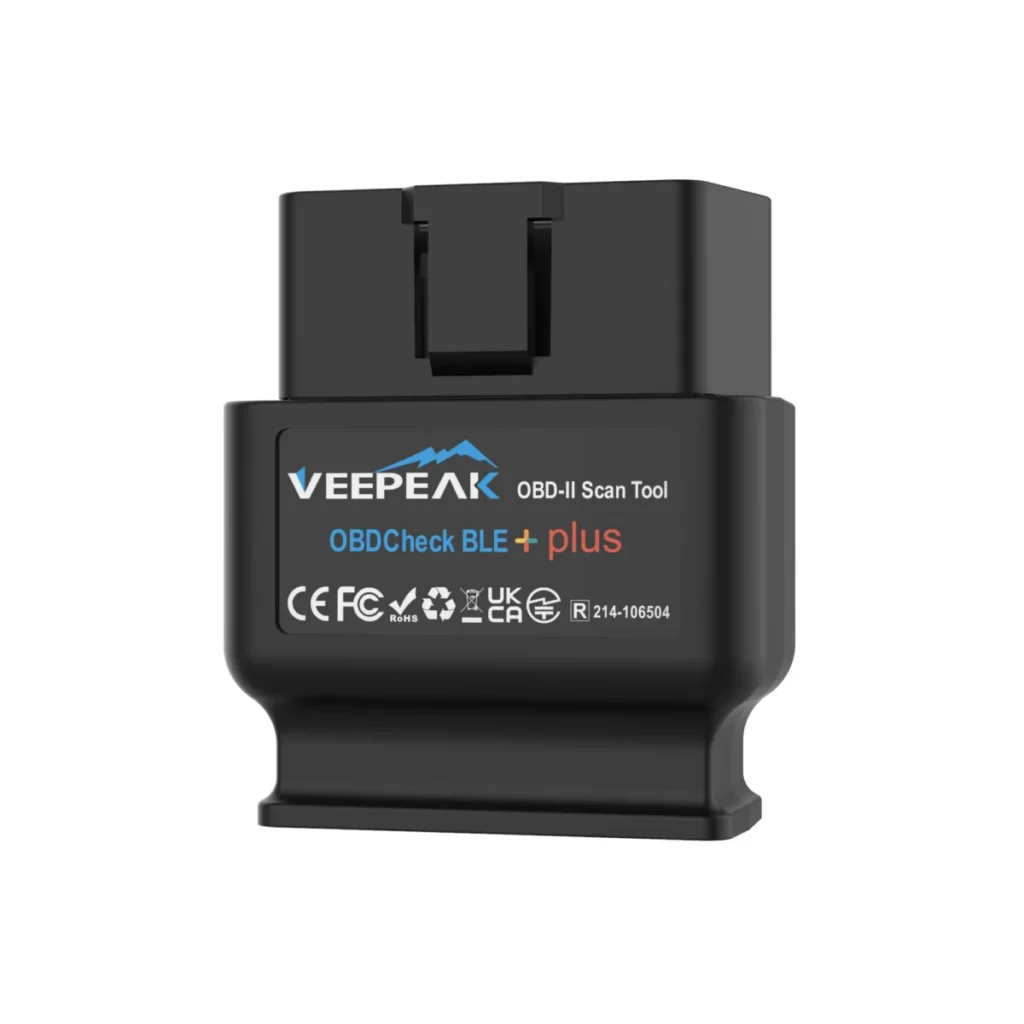
OBD Scanner
Screenless, app-driven, flexible
Choose OBD Scanner (the adapter route) if you want live sensor data, graphs and app flexibility on a phone you already own, and you accept that the app is separate and some features are paid.
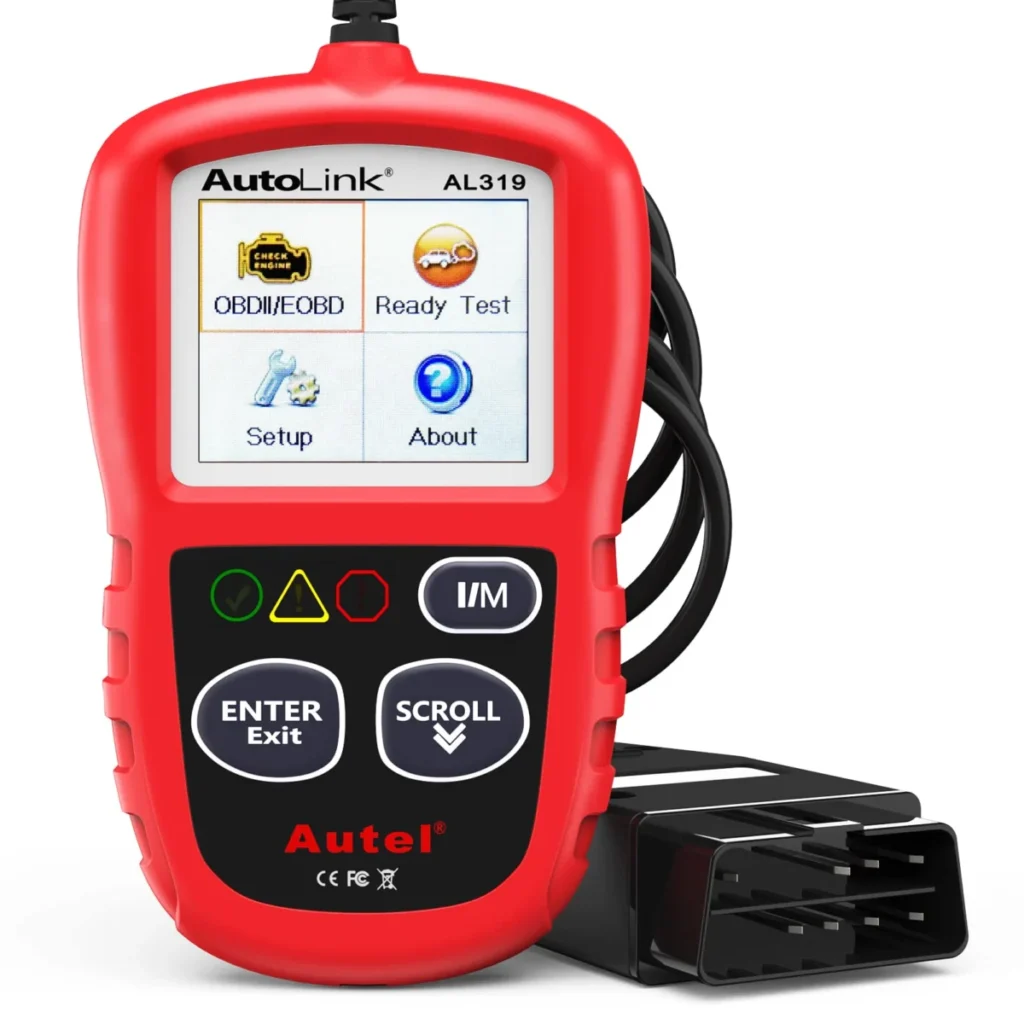
OBD2 Scanner
Self-contained, wired, simple
Choose OBD2 Scanner (the handheld reader route) if you want to read and clear a check engine light without pairing a phone, installing an app or paying for one.
Key takeaways
- OBD2 is the 1996-and-newer standard, so both tools here connect to the same 16-pin DLC; the difference is the device class, not the protocol.
- The Veepeak OBDCheck BLE+ has no screen and needs a compatible third-party app, while the Autel AL319 shows codes on its own 2.4-inch display.
- The Autel AL319 reads engine codes only, so an ABS or airbag light needs a tool with enhanced module support that neither listing promises.
- Clearing codes resets I/M readiness monitors on either tool, so a clean dash does not mean the car will pass an emissions test.
Table of contents9 sections · tap to expand
What is an OBD Scanner?
An OBD scanner in the adapter sense is a plug-in dongle that has no display of its own and sends engine data over Bluetooth to a phone or tablet app, which draws the screen.
What is an OBD2 Scanner?
An OBD2 scanner in the handheld sense is a self-contained code reader with its own screen, keypad and cable that reads and clears engine trouble codes directly from the car.
At a glance
OBD Scanner vs OBD2 Scanner at a glance
| Criterion | OBD Scanner | OBD2 Scanner |
|---|---|---|
| Device class | Bluetooth OBD2 adapter, no screen | Handheld code reader, wired |
| Systems read | Engine standard; other modules only via paid apps on some cars | Engine only |
| Vehicle coverage | OBD-II cars; app support varies by make and year | Post-1996 OBD-II vehicles, 16-pin DLC |
| Live data and freeze frame | Live sensor data and freeze frame through the app | Live data, freeze frame, I/M readiness, VIN |
| Service resets and active tests | Not supported per the listing | None; read and clear only |
| Updates and cost after purchase | App and in-app features may be paid separately | Free lifetime updates, no app needed |
| Platform and connection | Bluetooth LE and classic Bluetooth, iOS and Android | Wired cable, no pairing |
| Ease of use | Depends on the app and pairing steps | Plug and play with color screen and keypad |
Key differences
6 key differences between OBD Scanner and OBD2 Scanner
1. What OBD and OBD2 actually name
OBD is the family of on-board diagnostic standards, and OBD2 (also written OBD-II) is the 1996-and-newer version that standardized the 16-pin J1962 connector and a common set of codes. Before 1996, OBD-I cars used manufacturer-specific connectors and protocols, which is why an older project car may need an OBD1 adapter cable rather than either tool here.
For any car sold in the US from 1996, both the Veepeak adapter and the Autel AL319 plug into the same port and speak the same protocols, including CAN bus and ISO 15765 on 2008-and-newer vehicles. The label on the box is not the decision; what the tool can do once connected is.
2. Device class decides what you can actually do
The Veepeak OBDCheck BLE+ is an adapter, so the phone is the screen and the app sets the ceiling: generic engine functions are standard, while advanced data depends on the vehicle and the app. The Autel AL319 is a code reader, so its functions are fixed at read and clear codes, freeze frame, live data, I/M readiness and VIN, all on its own display.
That split matters most when a task needs more than a code. A basic reader cannot see ABS or airbag faults, and an adapter only reaches them through a compatible paid app on certain vehicles. If a warning light involves brakes or an airbag, treat either tool as a first look and plan on a shop or a bidirectional scan tool.
3. Live data, freeze frame and readiness monitors
Both tools show freeze frame and I/M readiness, but they present live data differently: the AL319 draws it on a 2.4-inch screen, and the Veepeak adapter streams it to an app that can graph and log it. For a quick check of a P0171 lean code or a P0300 misfire, the handheld screen is enough; for watching a sensor while driving, the app view is more useful.
Readiness monitors are the part readers underestimate. Clearing codes resets them, so a car that shows no fault may still fail an emissions check until it completes a drive cycle. Neither tool changes that, and neither should be treated as a way to pass a smog test.
4. Service resets, coding and active tests
Neither side here offers service functions: the Veepeak listing states that oil resets, EPB retract, injector coding and ABS bleeding are not supported, and the Autel AL319 is a read-and-clear code reader. An oil reset, electronic parking brake retract or battery registration needs a tool in a higher class, typically a bidirectional scan tool.
This is the clearest limit of the comparison. If your task is a DIY brake job on a car with an electronic parking brake, or an oil life reset, budget for a tool that explicitly lists those functions rather than expecting either of these to do it.
5. Software, apps and what you pay after purchase
The Autel AL319 includes free lifetime updates and needs no app, so the purchase price is the whole cost. The Veepeak adapter depends on third-party apps, and the listing notes that some apps and in-app features require a separate purchase.
That difference changes total cost over a few years. A reader is a one-time buy with a fixed feature set; an adapter can gain functions through apps but may cost more once the app you need is paid, and its features can vary by vehicle make, model and year.
6. Matching the tool to the car
Both tools target post-1996 OBD-II cars, but the adapter's usefulness depends on the app matching your make: the Veepeak listing notes that some vehicle-specific apps support only 2008-and-newer models, and that some apps are not compatible at all. The AL319 covers post-1996 OBD-II protocol vehicles broadly, with 7 languages and a plug-and-play interface.
For a mainstream car with a check engine light, either works. For a make-specific task such as coding on a BMW, the adapter route only helps if a supported app and model year line up; otherwise the handheld reader is the more predictable choice.
OBD Scanner: strengths and limitations
The Veepeak OBDCheck BLE+ is a Bluetooth adapter that uses a phone app as its display, offering live data and app flexibility in a small dongle. Its limits are real: no screen, app purchases, and no service resets or guaranteed module access.
Strengths
- Live sensor data can be graphed and logged by the app rather than shown on a small screen
- Works with iOS and Android over Bluetooth LE and classic Bluetooth
- Small and powered from the OBD-II port, so no batteries or cable clutter
- Compatible with several popular apps, including vehicle-specific ones for supported makes
Limitations
- No screen: it needs a compatible third-party app, and some apps or features are paid
- Service resets such as oil, EPB and injector coding are not supported
- Advanced module data depends on the vehicle and app, and some apps support only 2008-and-newer cars
Veepeak OBDCheck BLE+
A Bluetooth LE and classic Bluetooth adapter for iOS and Android that feeds live data and freeze frame to a compatible app. It has no screen and no service resets, so its value depends on the app you pair it with.
OBD2 Scanner: strengths and limitations
The Autel AL319 is a wired handheld code reader with a 2.4-inch color display that reads and clears engine codes without a phone. It is simple and self-contained, but it reads engine data only and offers no resets or active tests.
Strengths
- Reads and clears engine codes on its own screen with no pairing or app
- Free lifetime updates and 7 languages
- Plug-and-play interface suited to owners who do not want to learn an app
Limitations
- Engine systems only, so ABS, SRS and transmission faults are out of reach
- No service resets, coding or active tests
- Live data is limited to a 2.4-inch screen with no logging
Autel AL319 Code Reader
A wired handheld reader with a 2.4-inch color display that reads and clears engine codes, shows freeze frame, live data and I/M readiness, and includes free lifetime updates. It is engine-only and offers no resets or active tests.
Decision guide
Which should you choose?
| If you… | Choose | Why |
|---|---|---|
| A check engine light on a 2005-or-newer car and you just want the code and a clear | OBD2 Scanner | The Autel AL319 reads and clears codes on screen with no phone or app involved. |
| You want to watch live sensor data and log it while driving | OBD Scanner | The Veepeak adapter feeds live data to an app that can graph and record it. |
| An ABS or airbag warning light on a used car before purchase | Either | Neither listing guarantees those modules; the adapter may reach them only through a paid app on certain vehicles, and the AL319 is engine-only. |
| A smog check where readiness monitors matter | Either | Both show I/M readiness, but clearing codes resets the monitors, so neither substitutes for a proper drive cycle. |
| A DIY oil service that needs an oil reset | Either | The adapter listing states service resets are not supported, and the AL319 is a code reader without reset functions. |
| A pre-1996 project car with a manufacturer-specific connector | Either | Both tools are OBD-II only; an older car needs an OBD1 adapter cable and a tool that reads that protocol. |
Choose OBD Scanner if
- You want to watch and log live sensor data while driving, and a phone screen suits you better than a small handheld display
- You already use a compatible third-party app and want a small dongle that feeds it
- Your car is a supported make and year for a vehicle-specific app, and you accept that some features are paid
- You want one adapter that can serve several cars and apps rather than a dedicated reader
Choose OBD2 Scanner if
- You have a check engine light and want the code and a clear without installing an app
- You want a tool that works out of the box with free lifetime updates and no subscription
- You prefer a screen, keypad and cable over Bluetooth pairing and app settings
- You are buying for a friend or family member who needs something simple to use
Common questions
Frequently asked questions
Is an OBD scanner the same as an OBD2 scanner?
Not exactly. OBD is the family of diagnostic standards and OBD2 is the 1996-and-newer version, so a tool sold as an OBD2 scanner speaks the modern standard. In practice, most products labeled OBD scanner for a modern car are OBD2 tools, and the meaningful difference is the device class.
Will an OBD2 scanner work on my car?
It will work on any car with the 16-pin OBD-II connector, which covers US vehicles from 1996, EU petrol cars from 2001 and EU diesels from 2003. Pre-1996 cars use manufacturer-specific OBD-I connectors and need an OBD1 adapter cable and a tool that supports that protocol.
Can an OBD2 scanner read ABS and airbag codes?
Only if it has enhanced module support for your make. The Autel AL319 reads engine codes only, and the Veepeak adapter reaches ABS or SRS data only through a compatible paid app on certain vehicles. For a brake or airbag warning light, a bidirectional scan tool with listed module coverage is the safer route.
Do I need a subscription for an OBD2 scanner?
Not for the Autel AL319, which includes free lifetime updates. The Veepeak adapter itself has no subscription, but the apps it runs on may charge for some features, so check the app you plan to use before buying.
Which OBD2 scanner should I buy for a check engine light?
A handheld code reader like the Autel AL319 covers reading and clearing engine codes, freeze frame and readiness with no app. Choose a Bluetooth adapter like the Veepeak OBDCheck BLE+ instead if you want live data logging through a phone app and do not mind the setup.
Bottom line
The verdict
Choose the Autel AL319 if your task is a check engine light on a 1996-or-newer car and you want a self-contained OBD2 Scanner with a screen, free lifetime updates and no app to manage. Choose the Veepeak OBDCheck BLE+ if you want live data in an app, already use a compatible app, and accept that advanced functions depend on the vehicle and may cost extra.
Neither tool covers ABS, airbag or transmission faults reliably, and neither performs service resets or active tests. If a warning light involves brakes, steering or an airbag, or you need an oil reset or parking brake retract, plan on a bidirectional scan tool or a qualified mechanic rather than stretching either OBD Scanner past what it does.
Keep reading

ANCEL vs Autel: Match the Scanner Tier to the Fault You Need to Read
Pair each ANCEL class with the closest Autel class: systems read, update costs, screens and languages, plus when neither entry model does…

Code Reader vs OBD2 Scanner: Where the Line Falls at Live Data and ABS
Code Reader vs OBD2 Scanner compared on where the line falls: powertrain codes versus other modules and live data, with clear guidance…
Bluetooth vs Wired OBD2 Scanner: Which Fits Your Phone, Car and Repair Job
Bluetooth OBD2 Scanner or Wired OBD2 Scanner? Compare what each type is and screen side by side, with clear rules for which…