Bluetooth vs Wired OBD2 Scanner: Which Fits Your Phone, Car and Repair Job
Published October 29, 2026
As an Amazon Associate we earn from qualifying purchases. This never changes which products we recommend.
Choose a Bluetooth OBD2 scanner if you want live data, graphing and code reading on a phone you already carry, and you accept that the app decides what you can see. Choose a wired OBD2 scanner if you want a self-contained screen and buttons that work with no phone, no pairing and no app update, which matters at the roadside or in a shop.
The single deciding tradeoff in the Bluetooth OBD2 scanner vs wired OBD2 scanner question is convenience and screen size against independence and reliability.
Both types plug into the same 16-pin diagnostic link connector (J1962) and both read generic engine and emissions data from 1996-and-newer OBD-II cars. What separates them is the platform: a Bluetooth adapter is a radio that hands data to a phone app, while a wired handheld carries its own display and software. Neither type repairs anything; each reads and clears trouble codes and reports what the car's modules expose.
Quick verdict
A Bluetooth OBD2 scanner turns your phone into the display and leans on a third-party app for everything beyond basic engine codes. A wired OBD2 scanner puts a small screen, buttons and its own software in your hand and needs nothing else.
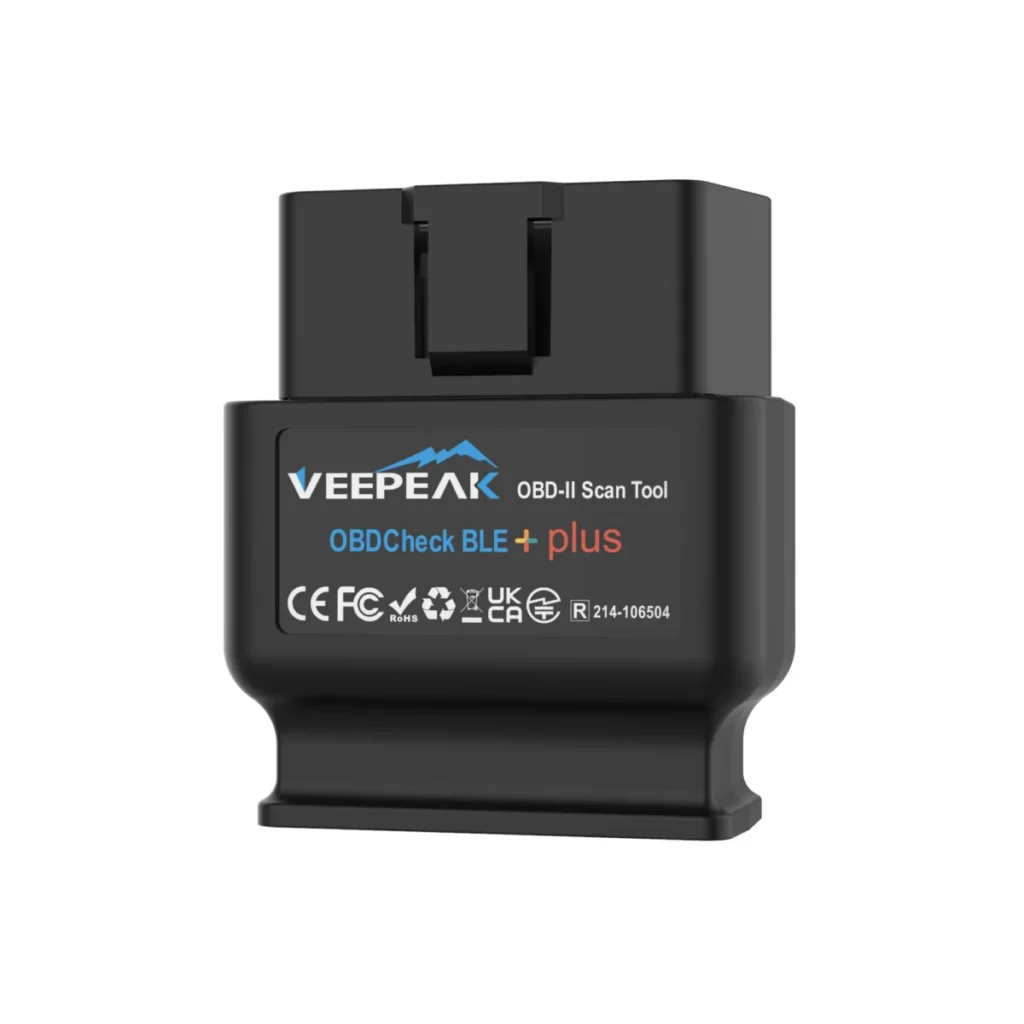
Bluetooth OBD2 Scanner
Pocket dongle, phone screen
Choose Bluetooth OBD2 Scanner if you want live data, freeze frame and graphing on a large phone screen, you are comfortable choosing and paying for the right app, and your car is a mainstream 1996-or-newer OBD-II model.
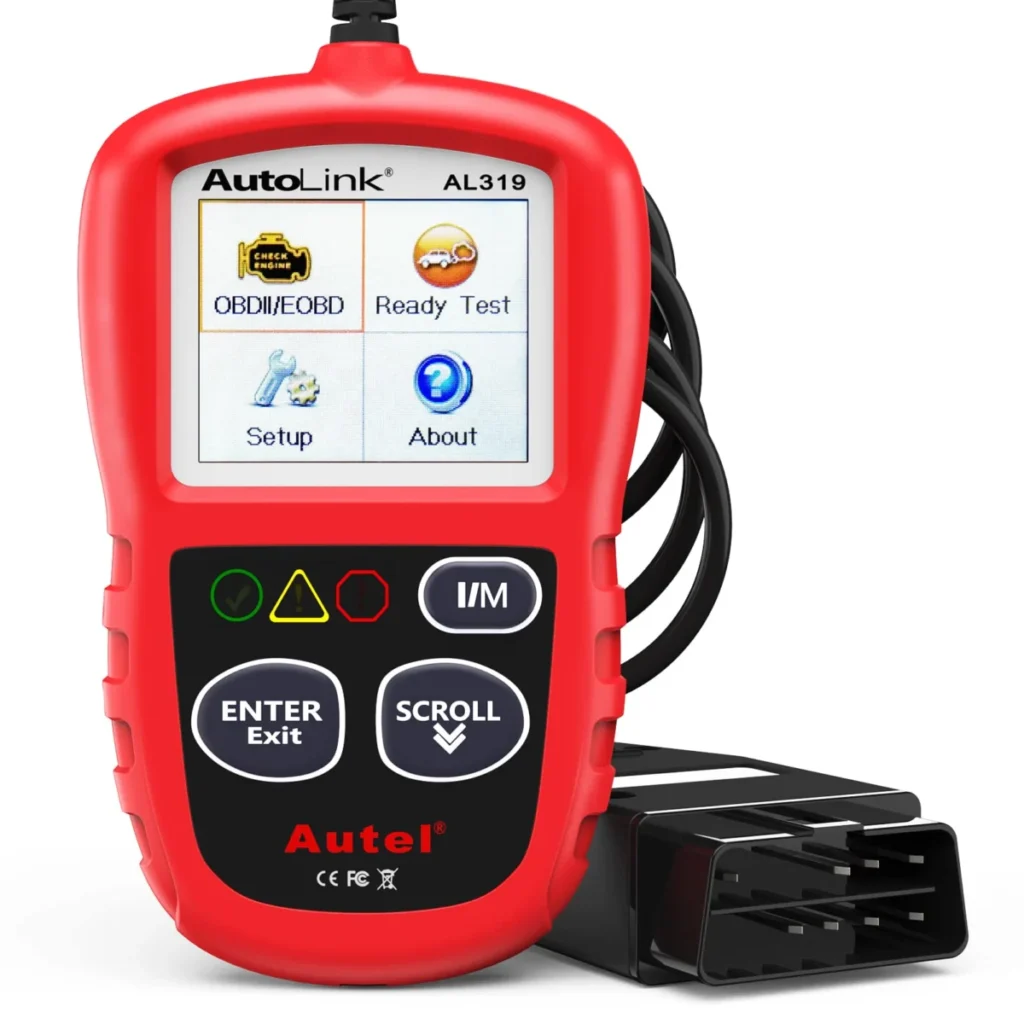
Wired OBD2 Scanner
Handheld screen, no phone
Choose Wired OBD2 Scanner if you want a standalone tool that reads and clears check engine codes with no phone, no pairing and no app, especially for glovebox or roadside use.
Key takeaways
- A Bluetooth OBD2 scanner is capped by its app: the adapter class sets what you can see, so a cheap dongle cannot add ABS or airbag reading the car does not expose.
- A wired OBD2 scanner keeps working with no phone, no pairing and no app update, which matters at the roadside or in a shop.
- Total cost differs: the Bluetooth side splits hardware from app or subscription cost, while the wired side is usually one purchase with the software included.
- Neither type repairs a fault; clearing codes resets readiness monitors and the fault can return, so a scan is not a fix.
Table of contents9 sections · tap to expand
What is a Bluetooth OBD2 Scanner?
A Bluetooth OBD2 scanner is a small plug-in adapter, usually ELM327-based, that reads the car's OBD-II data and sends it over Bluetooth LE or classic Bluetooth to a phone app that does the displaying.
What is a Wired OBD2 Scanner?
A wired OBD2 scanner is a handheld code reader with its own screen and buttons that plugs directly into the diagnostic link connector and shows codes without any phone or app.
At a glance
Bluetooth OBD2 Scanner vs Wired OBD2 Scanner at a glance
| Criterion | Bluetooth OBD2 Scanner | Wired OBD2 Scanner |
|---|---|---|
| Device class | Adapter (dongle) plus phone app | Handheld code reader with built-in screen |
| What it reads | Generic engine and emissions data; enhanced modules only if the app supports them | Engine codes, freeze frame, live data, I/M readiness, VIN |
| Screen and interface | Phone screen and app layout | 2.4 in color display and buttons |
| Connection | Bluetooth LE or classic Bluetooth; Wi-Fi on some models | Wired cable to the OBD-II port |
| Platform support | iOS and Android, app-dependent | No phone or platform needed |
| Software and update cost | Free and paid apps; some features or subscriptions cost extra | Free lifetime updates on the Autel AL319 |
| Live data and graphing | Yes, with app graphing | Yes, live data and freeze frame |
| Service functions and bidirectional control | Generally not supported by the adapter class | Not on a basic code reader; needs a bidirectional scan tool |
| Vehicle coverage | OBD-II 1996+, CAN; make-specific depth varies by app | Post-1996 OBD-II vehicles, CAN protocol |
| Portability and power | Pocket-sized, powered by the OBD-II port | Handheld, no batteries needed |
Key differences
8 key differences between Bluetooth OBD2 Scanner and Wired OBD2 Scanner
1. What each type is and what it can read
A Bluetooth OBD2 scanner is an adapter, not a complete diagnostic computer. The Veepeak OBDCheck BLE+ is a representative example: it reads and clears check engine codes, shows freeze frame, I/M readiness and live sensor data, and passes the data to a third-party app. The app decides the rest, and the listing notes that advanced diagnostics such as ABS, SRS, TPMS and BCM may be available for certain vehicles through compatible apps, which are usually paid.
A wired OBD2 scanner is a self-contained code reader. The Autel AL319 reads and clears DTCs, looks up code definitions, displays live data, freeze frame and I/M readiness, and shows vehicle information, all on its own 2.4-inch color screen. Its coverage is engine and emissions data, not ABS, airbag or body modules. On both sides, a warning light for ABS or airbag is not visible on a basic engine-only tool.
2. Screen and interface: phone app versus built-in display
The Bluetooth side borrows the best screen you own. A phone shows more rows of live data, larger graphs and clearer code descriptions than a small handheld, and app layouts can be configured to show the PIDs you care about. The cost is that you are learning an app, and the adapter listing itself warns that some apps or in-app features require a separate purchase.
The wired side puts a fixed interface in your hand. The Autel AL319 has a 2.4-inch TFT color display, a built-in speaker and a one-click I/M readiness button, and its listing describes it as plug and play for users unfamiliar with vehicle repair. That simplicity is the point: fewer choices, less setup, and the same screen every time you pick it up.
3. Connection reliability and platform support
A wired scanner has no pairing step, so it connects whenever the cable is seated in the OBD-II port. A Bluetooth adapter depends on the radio link and the app's connection settings; the Veepeak listing is explicit that on iOS you should not pair in the phone's Bluetooth menu but connect from within the app after setting the correct connection type, and that Android head units may not be supported.
Platform matters. Bluetooth LE is supported on both iOS and Android on the Veepeak OBDCheck BLE+, and classic Bluetooth works with certain Android apps. A Wi-Fi OBD2 adapter is the usual workaround when a phone or app handles Bluetooth poorly, at the cost of losing the phone's internet connection while connected. A wired handheld sidesteps the question because there is no radio and no operating system in the loop.
4. Software and update cost over several years
The Bluetooth side splits cost into hardware and software. The adapter is one purchase, but the app that makes it useful may be free, paid once, or subscription-based, and the Veepeak listing mentions a subscription and notes that some apps or in-app features require separate purchase from third-party developers. Over several years, the app can cost more than the dongle.
The wired side usually bundles the software. The Autel AL319 includes free lifetime updates and seven languages, so the purchase price is close to the total cost of ownership. That predictability is a real advantage for a buyer who does not want to re-evaluate an app subscription every year.
5. Live data, freeze frame and readiness on each platform
Both types show live data (PIDs), freeze frame and I/M readiness, but the experience differs. On a Bluetooth adapter, the app renders live data as graphs and logs, which suits watching a sensor over time or comparing before and after a repair. The Veepeak OBDCheck BLE+ supports these generic OBD-II functions through a compatible app.
On a wired code reader, live data and freeze frame appear on the built-in screen, which is enough to spot a stuck sensor or confirm a code's conditions but less comfortable for long graphing sessions. The Autel AL319 covers live data, freeze frame and one-click I/M readiness, which is the core of an emissions-related check.
6. Service functions, coding and bidirectional control
Neither of these two representative tools performs service functions or active tests. The Veepeak listing states plainly that special functions such as injector coding, EPB reset, ABS bleeding and oil/service resets are not supported, and the Autel AL319 is a read-only code reader. A home mechanic who needs an electronic parking brake retract, an ABS bleed or a battery registration needs a bidirectional scan tool, which is a different and more expensive class than either side here.
This is the clearest limit of the comparison. If your task is reading and clearing engine codes, either type works. If your task is commanding a module to do something, neither a Bluetooth adapter nor a basic wired code reader is the right purchase, and the money is better spent on a bidirectional tool.
7. Vehicle coverage, protocols and older cars
Both sides target mainstream OBD-II cars. The Autel AL319 covers post-1996 OBD-II vehicles with the 16-pin DLC and lists CAN among its protocols, and the Veepeak OBDCheck BLE+ lists CAN and vehicle years from 2008 for its vehicle-specific app use. OBD-II is mandatory on US cars from 1996 and CAN from 2008, so a 1996-to-2007 car may use older protocols such as J1850 PWM/VPW, ISO 9141-2 or KWP2000.
Make-specific depth is where the Bluetooth side can pull ahead, because some apps add manufacturer-specific functions. The Veepeak listing names several compatible apps, including vehicle-specific ones, while noting that model years before 2008 are not supported with its vehicle-specific apps and that MS-CAN is not supported in some of them. Pre-1996 cars need an OBD1 adapter cable and a tool that supports OBD1, which neither side here provides.
8. Portability, power and build for glovebox or shop use
A Bluetooth adapter is the more portable object. The Veepeak OBDCheck BLE+ measures about 1.97 by 1.61 by 0.87 inches and weighs 60 grams, is powered from the OBD-II port, and comes with a carrying case, so it can live in the glovebox. Its small size is also its weakness: there is nothing to read without a charged phone and a working app.
A wired handheld is built to be picked up and used. The Autel AL319 measures 4.61 by 2.83 by 0.71 inches, needs no batteries, and its listing notes the cable is long enough without getting in the way. For shop use, the absence of pairing and phone battery management is the practical difference, even though the handheld is the bulkier object to store.
Bluetooth OBD2 Scanner: strengths and limitations
A Bluetooth OBD2 scanner is a small adapter that turns a phone into the diagnostic display, which gives the largest screen and the most flexible graphing at the lowest hardware price. Its capability is set by the app, and the adapter class generally cannot perform service resets or bidirectional tests.
Strengths
- Largest screen and best graphing through a phone app
- Pocket-sized and powered from the OBD-II port, so it can stay in the car
- Low hardware cost, with free apps available for basic engine codes
- Some apps add make-specific functions beyond generic OBD-II
Limitations
- Depends on a phone, an app and a working Bluetooth link
- Advanced diagnostics and some features require paid apps or subscriptions
- Service resets and bidirectional tests are not supported by the adapter class
Veepeak OBDCheck BLE+
A Bluetooth LE and classic Bluetooth adapter for iOS and Android that covers generic OBD-II functions through a compatible app. Its listing is clear that advanced diagnostics depend on paid third-party apps and that service resets and ABS bleeding are not supported.
Wired OBD2 Scanner: strengths and limitations
A wired OBD2 scanner is a self-contained handheld code reader with its own screen, buttons and software, so it works with no phone and no pairing. It covers engine and emissions data well but does not read ABS, airbag or body modules, and it cannot run active tests.
Strengths
- Works with no phone, no app and no pairing
- Free lifetime updates on the Autel AL319 keep total cost predictable
- Built-in 2.4-inch color display, speaker and one-click I/M readiness
- No batteries needed and a cable that stays out of the way
Limitations
- Small screen and fixed interface compared with a phone app
- Engine and emissions data only, with no ABS, SRS or body modules
- No service functions or bidirectional control
Autel AL319 Code Reader
A wired handheld code reader with a 2.4-inch color display, live data, freeze frame, one-click I/M readiness and free lifetime updates. It reads engine and emissions data only, with no ABS, airbag or body modules.
Decision guide
Which should you choose?
| If you… | Choose | Why |
|---|---|---|
| A DIY owner who wants to read and clear a check engine light and watch live sensor data on a phone | Bluetooth OBD2 Scanner | The phone provides the large screen and graphing, and the adapter is small enough to leave in the car. |
| A used-car buyer doing a quick pre-purchase code scan with a pocket adapter | Bluetooth OBD2 Scanner | A small Bluetooth adapter plus a free app is enough for stored codes and I/M readiness on a 1996-or-newer car. |
| A home mechanic servicing brakes who needs an electronic parking brake retract and ABS bleed | Wired OBD2 Scanner | Those are service functions and active tests, which the adapter class generally cannot perform and which require a bidirectional scan tool. |
| A small shop or serious DIYer who wants a standalone tool with a screen and no phone dependency | Wired OBD2 Scanner | A wired handheld keeps working with no pairing, no app update and no phone battery to manage. |
| An iPhone user deciding between a Bluetooth adapter, a Wi-Fi adapter and a wired handheld | Either | A Bluetooth LE adapter that lists iOS support works, a Wi-Fi adapter is the fallback, and a wired handheld avoids the platform question entirely. |
Choose Bluetooth OBD2 Scanner if
- You want live data graphed on a large phone screen and are willing to choose and possibly pay for the right app.
- You want a pocket adapter that stays in the glovebox for quick code checks and pre-purchase scans.
- You drive a 1996-or-newer OBD-II car and your main need is check engine codes, freeze frame and readiness.
- You use an app with make-specific support and accept its model-year and protocol limits.
Choose Wired OBD2 Scanner if
- You want a standalone tool that reads and clears check engine codes with no phone, no pairing and no app.
- You work at the roadside or in a shop where phone battery, signal and app updates should not be variables.
- You prefer one purchase with free lifetime updates over an app that may charge or subscribe.
- Your diagnostic goal is engine and emissions data, not ABS, airbag or body modules.
Common questions
Frequently asked questions
Is a Bluetooth OBD2 scanner as good as a wired one?
For generic engine and emissions data, a Bluetooth adapter with a good app matches a basic wired code reader and adds better graphing. It falls short on independence, because it needs a phone and an app, and on service functions, which the adapter class generally does not support.
Can a Bluetooth OBD2 scanner read ABS and airbag codes?
Sometimes, but only when the car exposes those modules and the app supports them. The Veepeak OBDCheck BLE+ listing says advanced diagnostics such as ABS, SRS, TPMS and BCM may be available for certain vehicles through compatible apps, which are usually paid. A basic wired code reader reads engine codes only.
Do I need a subscription for a Bluetooth OBD2 scanner app?
Not always, but often for advanced features. Free apps cover basic engine codes, while the Veepeak listing mentions a subscription and notes that some apps or in-app features require a separate purchase from third-party developers. A wired code reader such as the Autel AL319 includes free lifetime updates.
Why won't my Bluetooth OBD2 scanner connect to my phone?
The most common cause is pairing in the phone's Bluetooth menu instead of inside the app. The Veepeak listing says to connect from within the app after setting the correct connection type, and notes that Android head units may not be supported. Check the ignition state, the port fuse and the app's protocol setting next.
Can a wired OBD2 scanner work without a phone or app?
Yes. A wired handheld such as the Autel AL319 has its own screen, buttons and software, so it reads and clears codes with nothing else connected. That independence is its main advantage over a Bluetooth adapter.
Which is better for an iPhone, Bluetooth or Wi-Fi?
A Bluetooth LE adapter that lists iOS support, such as the Veepeak OBDCheck BLE+, is the simpler choice because it pairs through the app. A Wi-Fi OBD2 adapter is the fallback when an app handles Bluetooth poorly, but it takes over the phone's network connection while in use.
Bottom line
The verdict
Choose the Bluetooth side when the phone screen and app flexibility are the point: live data graphing, quick code checks and a dongle that lives in the glovebox. Choose the wired side when independence is the point: a handheld that reads and clears check engine codes with no phone, no pairing and free lifetime updates.
Neither side performs service resets or active tests. If your job is an electronic parking brake retract, an ABS bleed or a battery registration, save for a bidirectional scan tool instead of buying either type, because a code reader reads data and does not fix the fault.
Keep reading

ANCEL vs Autel: Match the Scanner Tier to the Fault You Need to Read
Pair each ANCEL class with the closest Autel class: systems read, update costs, screens and languages, plus when neither entry model does…

Code Reader vs OBD2 Scanner: Where the Line Falls at Live Data and ABS
Code Reader vs OBD2 Scanner compared on where the line falls: powertrain codes versus other modules and live data, with clear guidance…
OBD vs OBD2 Scanner: What the Names Mean and Which Tool Your Car Needs
OBD is the standard family and OBD2 is the 1996-and-newer version. See which device class reads your engine, ABS or airbag faults,…