Code Reader vs Scan Tool: Which Modules Each One Reaches and What It Can Command
Published October 29, 2026
As an Amazon Associate we earn from qualifying purchases. This never changes which products we recommend.
Choose a Code Reader if the only thing on your dash is a check engine light and you want the stored powertrain code, freeze frame and readiness status. Choose a Scan Tool if the warning involves ABS, an airbag, the transmission or the body computer, or if the repair needs live data, an active test or a service reset.
The deciding tradeoff in the Code Reader vs Scan Tool question is reach and control: how many modules the device can talk to, and what it can tell them to do.
Both classes plug into the same 16-pin diagnostic link connector (J1962) and both speak CAN and the older protocols. What separates them is what happens after the handshake. A Code Reader listens to the engine computer; a Scan Tool addresses many modules, and a bidirectional Scan Tool also sends commands. This comparison stays on that ladder and leaves price out of it.
Quick verdict
A Code Reader is a read-and-clear device for engine and emissions codes. A Scan Tool adds module reach and, at the top of the class, the ability to command components and run service resets.
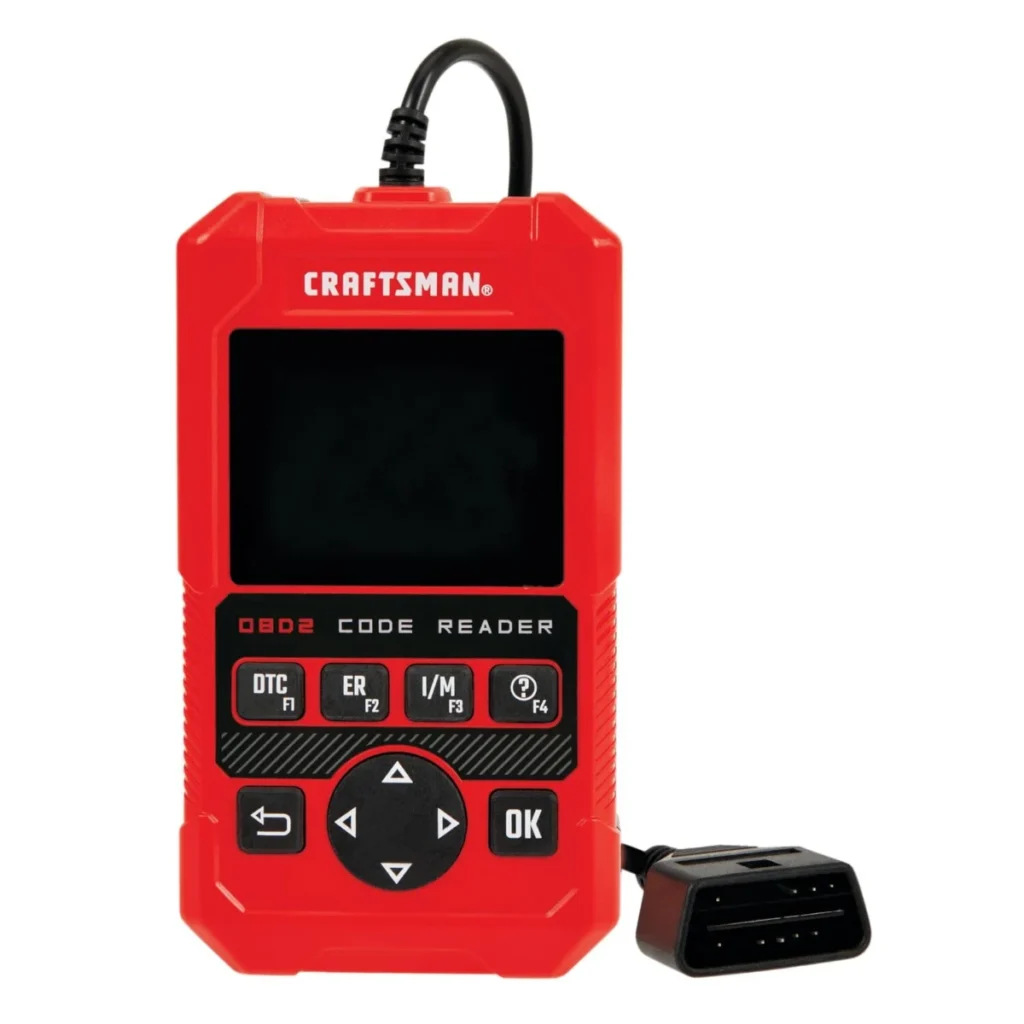
Code Reader
Read, clear, done
Choose Code Reader if you have a single check engine light, want the stored code and freeze frame, and do not need ABS, airbag, transmission or body data.
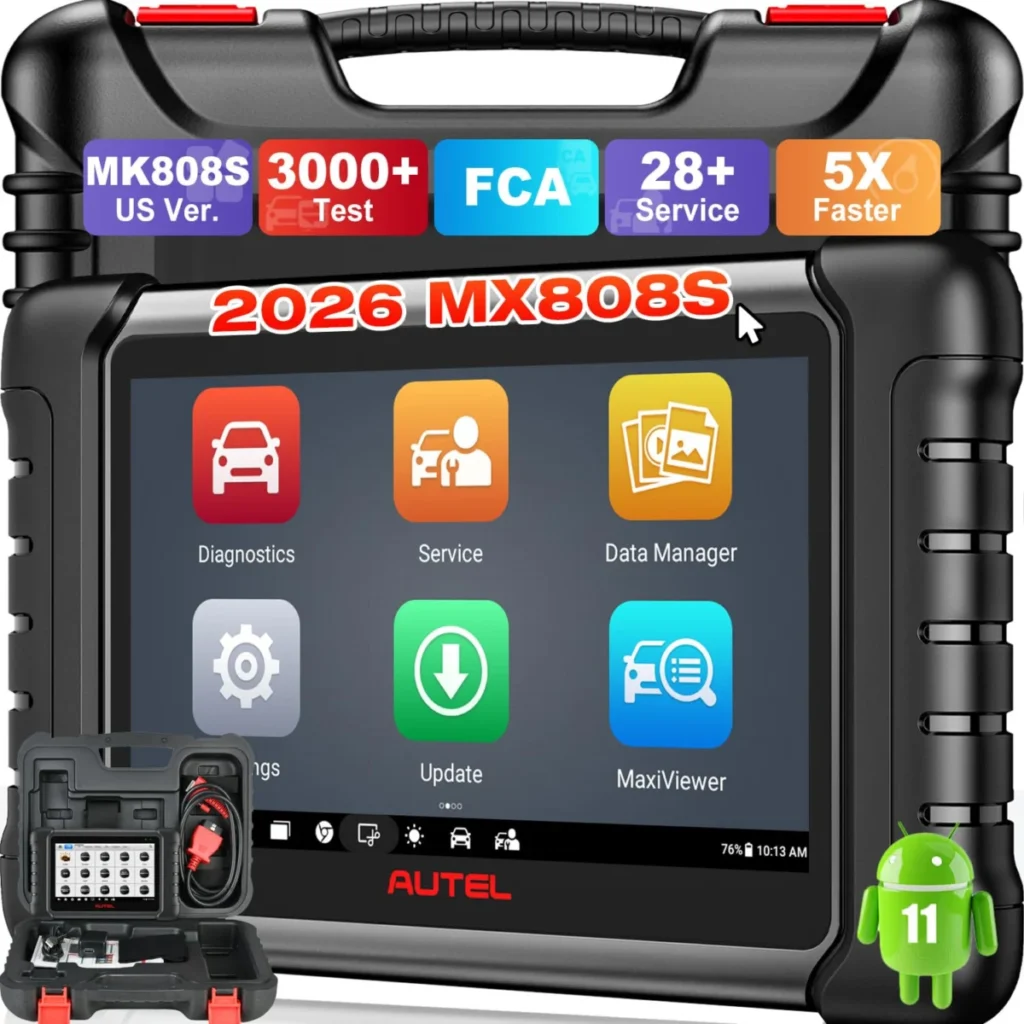
Scan Tool
Reach and command
Choose Scan Tool if a dash warning sits outside the engine, if the fault is intermittent, or if the repair needs an active test or a service reset.
Key takeaways
- A Code Reader reaches the engine/PCM and emissions data; a Scan Tool reaches ABS, SRS, transmission and body modules as well.
- Reading and clearing codes is the floor for both classes; live data, active tests and service resets are what a Scan Tool adds above it.
- A Scan Tool without bidirectional control still cannot run actuator tests, so reach and control are two separate steps on the ladder.
- Clearing codes resets I/M readiness monitors, so a cleared code does not repair the fault and the monitors must complete again before an emissions check.
Table of contents9 sections · tap to expand
What is a Code Reader?
A Code Reader is a handheld OBD2 device that reads and clears engine (powertrain) trouble codes, and typically shows freeze frame and I/M readiness status, but does not address modules outside the powertrain.
What is a Scan Tool?
A Scan Tool is an OBD2 diagnostic device that reads codes and live data across multiple vehicle modules, and in its bidirectional form can send commands to components and run service resets.
At a glance
Code Reader vs Scan Tool at a glance
| Criterion | Code Reader | Scan Tool |
|---|---|---|
| Module reach | Engine/PCM and emissions only | Engine, ABS, SRS, transmission, body and more (per listing) |
| Command set | Read and clear codes | Read, clear, live data, active tests, service resets |
| Trouble code depth | Generic P codes, sometimes with no description | Generic and manufacturer-specific P, B, C and U codes |
| Live data and freeze frame | Freeze frame and basic live data | Multi-format live data (graph, text, meter, waveform) |
| Bidirectional control | None (read-only) | Yes on bidirectional models: actuator tests, ABS bleed, EPB retract, EVAP tests |
| Platform and connection | Wired handheld with its own screen | Wired handheld with its own screen; phone-adapter apps sit lower on the ladder |
| Software and updates | No subscription stated | Subscription mentioned in the listing |
| Ease of use and risk | Few menus, little interpretation needed | More menus and settings; wrong commands carry risk |
| Vehicle coverage | 1996-and-newer OBD-II cars | 1996-and-newer OBD-II cars, wider with enhanced data |
Key differences
7 key differences between Code Reader and Scan Tool
1. Module reach: engine only versus the whole car
A Code Reader talks to the engine computer and the emissions-related data it publishes. A Scan Tool addresses the other modules on the same bus: ABS, SRS airbag, transmission/TCM, body/BCM and more, depending on the vehicle and the tool's enhanced coverage. That difference decides whether an ABS or airbag warning is visible at all.
The consequence is simple. If the only lamp is the check engine light, engine reach is enough. If the dash shows an ABS, airbag or transmission warning, a Code Reader cannot name the fault, and the car needs a device that reaches that module before any part is ordered.
2. Command set: reading codes versus commanding components
Both classes read and clear diagnostic trouble codes. A Scan Tool adds live data (PIDs), and a bidirectional Scan Tool adds active tests and actuator tests: cycling a cooling fan, running an EVAP test, bleeding ABS or retracting an electronic parking brake. Service resets such as oil life, battery registration and steering angle calibration sit in the same command layer.
This is where the three-class ladder gets blurred. A Scan Tool that reads many modules but has no bidirectional control still cannot run an actuator test. Reach and control are separate steps, and a buyer who needs a brake retract needs the top step, not just a bigger screen.
3. Trouble code depth: generic P codes versus manufacturer-specific codes
A Code Reader typically reports generic powertrain codes, the P0xxx set that OBD-II standardizes. A Scan Tool also exposes manufacturer-specific codes and the B (body), C (chassis) and U (network) families, which is why a reader can show a code with no description while a Scan Tool names the circuit.
The practical effect: a generic P0171 points at a lean condition across the engine, while a manufacturer-specific code can narrow it to a bank, a sensor circuit or a module. Neither code identifies a failed part on its own, but the narrower code shortens the diagnostic path.
4. Live data and freeze frame for intermittent faults
Freeze frame captures the engine conditions at the moment a code set, and both classes usually show it. Live data is the wider capability: a Scan Tool streams and graphs many PIDs at once, so oxygen sensor voltage, fuel trims, mass air flow and coolant temperature can be watched while the fault is happening.
For a recurring P0420 or P0171, that streaming view is what separates a guess from a diagnosis. A Code Reader gives the snapshot; a Scan Tool lets you watch the system behave, which matters when the fault does not stay put.
5. Platform and connection: handheld screens versus phone adapters
Both sides here are wired handhelds with their own screens, which keeps the comparison like for like. A Bluetooth or Wi-Fi OBD2 adapter is a third shape: no screen, an app such as Torque, and a capability set that depends entirely on the app and the adapter chip.
Phone adapters belong on the same reach-and-control ladder, not in a separate category. A generic ELM327-based adapter with a basic app behaves like a Code Reader; a make-specific app paired with a capable adapter can reach enhanced modules. The device class is set by the software behind the plug, not by the plug.
6. Software, updates and the cost of staying current
Update models differ between the classes. The Autel MaxiCheck MX808S listing mentions a subscription, while the CRAFTSMAN CMMT77693 Code Reader states no subscription at all. A Scan Tool's value depends on current vehicle coverage, so the update terms belong in the buying decision alongside reach and control.
Read the terms literally before buying. A tool that covers 200+ brands and 10,000+ vehicles is only as useful as its software is current for your model year, and that is a recurring consideration a simple reader does not carry.
7. Ease of use and risk: interpretation versus command
A Code Reader asks little of the user: plug in, read, clear. A Scan Tool asks for menu choices, correct vehicle identification and, on bidirectional models, a decision about which component to command. That extra power carries risk, because an active test or a reset performed on the wrong system can leave a module in an unexpected state.
The rule that follows: match the device to the job. A reader for a single check engine light is low effort and low risk. A bidirectional tool is worth its complexity when the work genuinely needs commands, and it should be used with the service manual at hand.
Code Reader: strengths and limitations
The CRAFTSMAN CMMT77693 is a wired handheld Code Reader with a 2.8-inch screen that reads and clears codes, shows freeze frame and reports I/M readiness. It covers engine and emissions data and is read-only, so it does not reach ABS, airbag, transmission or body modules.
Strengths
- Reads and clears powertrain codes, with freeze frame and readiness status on screen
- Live data and Modes 1-10 support basic engine monitoring
- Simple handheld operation with no subscription stated
- Very positive buyer ratings from a small number of buyers
Limitations
- Read-only, so no active tests or service resets
- Engine and emissions systems only, so ABS, SRS and transmission faults stay invisible
CRAFTSMAN CMMT77693 Code Reader
It is read-only and engine-focused, which is exactly the scope of a check engine light diagnosis.
Scan Tool: strengths and limitations
The Autel MaxiCheck MX808S is a wired bidirectional Scan Tool on Android 11 with a 6.99-inch screen, full-system diagnostics and 28 service functions across 200+ brands. It reads and clears codes in engine, transmission, ABS, SRS, TPMS and battery systems and runs 3000+ active tests.
Strengths
- Reaches ABS, SRS, transmission, body and other modules, not just the engine
- 3000+ active tests allow component commands such as fuel pump and cooling fan activation
- 28 service functions include oil reset, ABS brake bleeding, EPB reset, BMS and SAS calibration
- Live data in graph, text, column, meter and waveform formats for intermittent faults
Limitations
- Subscription mentioned in the listing, so software cost continues after purchase
- More menus and settings, and commanded tests carry risk if applied to the wrong system
Autel MaxiCheck MX808S
It adds 3000+ active tests and multi-format live data, with a subscription mentioned in the listing.
Decision guide
Which should you choose?
| If you… | Choose | Why |
|---|---|---|
| A check engine light appears the day before a road trip and you want the stored code now | Code Reader | A Code Reader pulls the stored powertrain code, freeze frame and readiness status without extra modules or menus. |
| A used car shows an ABS or airbag light and you want the module-level code before buying | Scan Tool | Those warnings live in modules a Code Reader does not reach, so only a Scan Tool with enhanced coverage can name the fault. |
| You are doing your own brake pads and the car has an electronic parking brake | Scan Tool | Retracting the parking brake calipers is a commanded service function, not a read. |
| A P0420 keeps returning and you need to watch oxygen sensor and fuel trim data on a test drive | Scan Tool | Live data (PIDs) and graphs show whether the catalyst, a sensor or a mixture fault is behind the code. |
| A small shop wants one handheld that reads all systems and runs active tests on many brands | Scan Tool | Multi-module reach plus bidirectional control is what lets one tool cover several makes and jobs. |
| You own one older car, the light is steady, and you only want to know what tripped it | Code Reader | The code and freeze frame answer the question; extra modules and commands would go unused. |
Choose Code Reader if
- A single check engine light on a 1996-or-newer car and you want the stored code, freeze frame and readiness status
- You want a handheld that reads and clears codes without menus for modules you will never open
- You are checking your own car before a trip and only need to know what tripped the lamp
- You do not plan to touch brakes, oil resets or ABS work that requires commands
Choose Scan Tool if
- An ABS, airbag or transmission warning is on and you need the module-level code before authorizing a repair
- A recurring P0420 or P0171 needs live data and graphs to separate a sensor, a catalyst or a mixture fault
- You are doing brake or oil service that needs an electronic parking brake retract, ABS bleed or an oil-life reset
- You own several cars or run a small shop and want one tool that reaches all systems and runs active tests across many brands
Common questions
Frequently asked questions
Can a Code Reader read ABS and airbag codes?
No. A Code Reader reaches the engine and emissions data, while ABS and airbag faults live in separate modules. Reading those warnings requires a Scan Tool with enhanced coverage for your make, which is why an ABS or SRS light is the usual point where buyers move up a class.
What can a Scan Tool do that a Code Reader cannot?
A Scan Tool reaches modules beyond the engine, including ABS, SRS, transmission and body computers, and shows manufacturer-specific codes alongside generic ones. Bidirectional models also run active tests and service resets, which a read-only reader cannot do at any setting.
Do I need a bidirectional Scan Tool for brakes and oil resets?
For an electronic parking brake retract, an ABS bleed or an oil-life reset, yes: those are commands, not reads. A Scan Tool without bidirectional control can display data from those modules but cannot perform the service. Check the function list for your model before buying.
Will clearing codes with a Code Reader make my car pass an emissions test?
No. Clearing codes also resets the I/M readiness monitors, and an emissions check typically requires those monitors to be complete. The underlying fault can return, so clearing is a diagnostic step, not a repair or a route to passing.
Is a Bluetooth OBD2 adapter with an app the same as a Scan Tool?
It depends on the app and the adapter.
Does a Scan Tool work on all 1996 and newer cars?
Every 1996-and-newer US car has the standard 16-pin connector and basic OBD-II, so code reading works broadly. Enhanced module coverage, service functions and active tests vary by make, model and year, so compatibility should be checked against the specific vehicle before purchase.
Bottom line
The verdict
Choose the Code Reader when the fault is a check engine light and the job is to read, understand and clear a powertrain code. The CRAFTSMAN CMMT77693 fits that narrow task with freeze frame and readiness status and no subscription, and it is the honest choice for a single-car owner who will never open an ABS menu.
Choose the Scan Tool when the warning sits outside the engine, when the fault is intermittent, or when the repair needs a command rather than a read. The Autel MaxiCheck MX808S covers all systems, 28 service functions and 3000+ active tests, and its subscription is the price of that reach. Neither class repairs anything: a code points to a circuit or system, and brake, airbag, steering or oil-pressure warnings belong with a qualified mechanic.
Keep reading

Code Reader vs OBD2 Scanner: Where the Line Falls at Live Data and ABS
Code Reader vs OBD2 Scanner compared on where the line falls: powertrain codes versus other modules and live data, with clear guidance…
Bluetooth vs Wired OBD2 Scanner: Which Fits Your Phone, Car and Repair Job
Bluetooth OBD2 Scanner or Wired OBD2 Scanner? Compare what each type is and screen side by side, with clear rules for which…
OBD vs OBD2 Scanner: What the Names Mean and Which Tool Your Car Needs
OBD is the standard family and OBD2 is the 1996-and-newer version. See which device class reads your engine, ABS or airbag faults,…