Free OBD2 Code Reading: What a Store Scan Shows and What It Hides
Published October 29, 2026
Quick answer
Free obd2 code reading gets you the engine (powertrain) trouble codes behind a check engine light, and most services will also clear them. It does not diagnose the fault, it usually cannot see ABS, airbag, transmission or body modules, and clearing codes resets the I/M readiness monitors. Treat a free scan as a starting point for a decision, not a repair estimate.
Table of contents13 sections · tap to expand
Key takeaways
- A free reading covers engine codes, pending codes, freeze frame and readiness monitors; it is not a diagnosis and points to a circuit or system, not always a failed part.
- ABS, SRS airbag and transmission faults need enhanced manufacturer-specific coverage that basic code readers and free store scans do not provide.
- Clearing a code resets readiness monitors, so a free clear can delay an emissions pass rather than secure one.
- A low-cost wired code reader pays for itself after a few visits and keeps the freeze frame and readiness data on hand.
- Brake, airbag, steering and oil-pressure warnings are not DIY scan territory; those belong with a qualified mechanic.
Our pick for this
Autel AL319 Code Reader
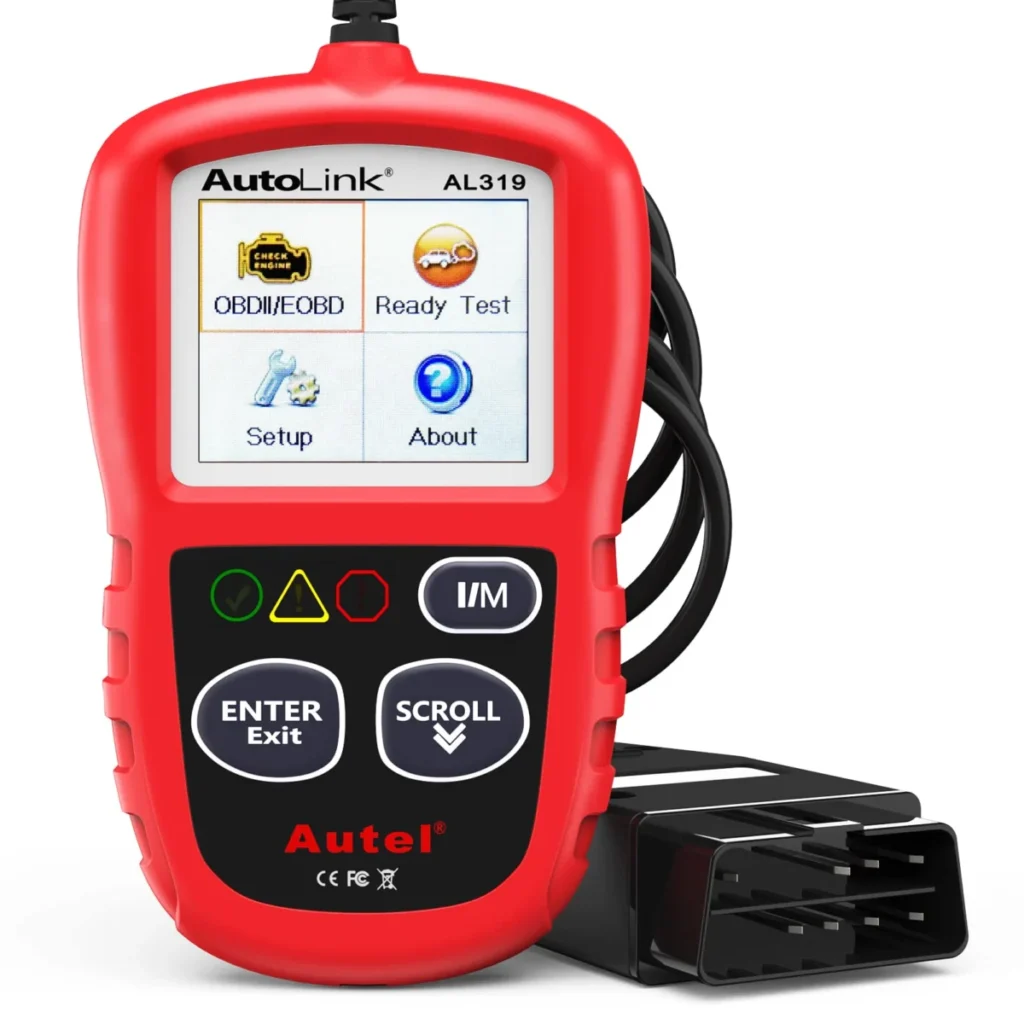
- Why we pick it: It is a wired code reader with a 2.4-inch color screen, live data, VIN display and free lifetime updates, so the data stays with you after a repair.
- Best for: Reading and clearing engine codes, freeze frame and I/M readiness at home instead of relying on a store scan.
- Keep in mind: Read-only and engine-only, so it cannot see ABS, airbag or transmission faults and cannot run active tests or service resets.
As an Amazon Associate we earn from qualifying purchases. This never changes which products we recommend.
Recommended products
Products that fit this
| Product | Best for | Where to buy |
|---|---|---|
| Autel AL319 Code Reader | Reading and clearing engine codes, freeze frame and I/M readiness at home instead of relying on a store scan. | Check price on Amazon |
| ANCEL AD310 Scan Tool | Cars showing ABS, airbag or transmission warnings alongside a check engine light. | Check price on Amazon |
| KONNWEI KW850 Code Reader | Watching live sensor data and running O2 sensor and EVAP tests while tracking down a drivability fault. | Check price on Amazon |
What does a free OBD2 code reading actually give you?
A free reading pulls the stored and pending engine codes from the powertrain control module through the 16-pin OBD-II port, and most services will clear them on request. You typically also get the freeze frame (a snapshot of engine conditions when the fault set) and the I/M readiness monitor status.
That is genuinely useful: a P0420 catalyst efficiency code or a P0300 random misfire code tells you which system to investigate before you authorize any work. What it does not give you is a diagnosis. A code names a circuit or a system, and the actual cause can be a sensor, a connector, a vacuum leak or wiring.
The other limit is scope. A free scan is engine-only in practice. It will not show ABS wheel-speed faults, airbag codes, transmission codes or body module faults, because those live in modules that need enhanced manufacturer-specific support.
Finally, a free clear is not free in consequences. Clearing codes wipes the freeze frame and resets readiness monitors, which is exactly the data an emissions test checks. If a smog check is coming up, ask for the codes to be read and written down, not erased.
Where can you get check engine codes read for free?
Parts stores are the most common free route, and many national chains advertise a check engine light scan at the counter. Policies vary by location and by staff on duty, so call ahead and ask two questions: do they scan, and will they clear codes or only read them. Do not assume a specific store's policy or stock; confirm it before you drive over.
Tool loaner programs are the second free route. Some stores lend out code readers against a deposit, which means you get the tool in your hands, can note the freeze frame at your own pace, and return it afterward. Availability varies by store, so call first.
The third route costs a little up front but nothing per use: a Bluetooth OBD2 adapter paired with a phone app. An ELM327-based adapter plus a free app tier gives you code reading, freeze frame and live data on your own phone. The catch is app quality and adapter quality vary widely, and cheap clone chips are a known problem.
A fourth option is a mobile mechanic or a shop that offers a low-cost or complimentary code pull as a loss leader. That is worth asking about if the car is not driveable, but expect the scan to come with a repair quote attached.
Want to skip the research? The Autel AL319 Code Reader is the model we would start with.
What a free scan cannot see: ABS, airbag and transmission faults
A free scan reads the engine computer, so an ABS light, an SRS airbag light or a transmission warning will not appear on a basic reader. Those systems have their own modules, and reading them requires enhanced coverage built for the specific make and model.
This is the single biggest gap in free code reading. A wheel-speed sensor fault, an airbag clock-spring fault or a transmission solenoid code all sit outside generic OBD-II emissions data, which is what every OBD2 tool is guaranteed to read.
Device class explains the rest. A code reader reads and clears engine codes. An OBD2 scan tool adds live data and graphing. A bidirectional scan tool can also send commands to the car, such as running an active test or retracting an electronic parking brake, and usually adds service resets and coding. Free store scans sit at the code reader end of that ladder.
If your dash shows an ABS or airbag warning, a free scan will not answer your question. You need a tool with enhanced coverage for your brand, or a shop diagnostic.
How to read your own codes in five steps
Reading your own codes takes a few minutes and works the same way with a borrowed reader or a purchased one. The procedure below assumes a 1996-or-newer car with a standard 16-pin diagnostic link connector (J1962).
Write the codes down before you clear anything, and photograph the freeze frame screen if the tool shows one. That snapshot is often more informative than the code itself, because it records the engine speed, load and temperature at the moment the fault set.
Readiness monitors matter as much as the codes. If several monitors show "not ready," the car has recently had its battery disconnected or its codes cleared, and an emissions test will likely fail on readiness alone.
- Find the OBD-II port: usually under the driver-side dash within reach of the seat, sometimes behind a small cover or near the center console.
- Turn the ignition to the on position without starting the engine, or start the engine if the tool's instructions say so.
- Plug the tool into the 16-pin connector and wait for it to link with the vehicle.
- Read the stored, pending and permanent codes, then record the freeze frame and any live data the tool displays.
- Check the I/M readiness monitors and note which are ready and which are not before deciding whether to clear anything.
What the code means, and why clearing it is not a repair
A trouble code identifies a circuit or system that reported out of range, not a part that has failed. P0420 means the catalyst efficiency is below threshold, which can come from the catalyst itself, an upstream or downstream oxygen sensor, an exhaust leak or an engine misfire feeding the converter.
Codes come in two flavors. Generic P codes are defined by the OBD-II standard and read the same on any car. Manufacturer-specific codes use the same P, B, C and U prefixes but carry brand-specific meanings, and a basic reader may show only the number without a useful description.
Clearing a code turns off the check engine light and resets the readiness monitors. If the underlying fault is still present, the code returns, often within a few drive cycles. That is why a cleared light is not evidence of a fix, and why clearing codes right before an emissions test usually backfires.
Permanent codes are a separate category: they clear themselves only after the car completes enough fault-free drive cycles, so a scan can still show a code the dashboard no longer displays.
When a free reading is enough and when to buy a code reader
A free reading is enough when the only symptom is a steady check engine light, the car runs normally, and you want the code before deciding whether to book a shop. It is also enough for a pre-purchase glance at a used car, provided you also check readiness monitors and understand that a freshly cleared car hides its history.
Buy a code reader when you want the data to stay in your hands. A basic reader costs less than many shop diagnostics, keeps the freeze frame and readiness status available for comparison after a repair, and works on any 1996-or-newer car you own.
That is the case for the Autel AL319, a wired code reader that reads and clears engine codes and shows freeze frame, live data and I/M readiness, with free lifetime updates and a 2.4-inch color screen. It is read-only and engine-only, so it will not touch ABS or airbag faults.
Step up when the job needs more than engine codes. The ANCEL AD310 is listed as an enhanced scan tool covering engine, ABS, SRS airbag and transmission systems, with support for CAN, J1850, ISO 9141 and KWP2000 protocols on 1996-or-newer vehicles. It is still read-only, so it reads those modules but cannot run active tests or service resets.
If you want live data on a bigger display and a battery test function, the KONNWEI KW850 adds O2 sensor and EVAP tests plus a graphical live data stream, again engine-only and read-only. Choose it if you plan to watch sensor readings over time; skip it if ABS or airbag codes are your concern.
Which code reader fits which job
Match the tool to the warning light, not to the price tag. For a plain check engine light and a code you want to look up yourself, the Autel AL319 covers the job: engine codes, freeze frame, live data, I/M readiness and VIN, in 7 languages, with free lifetime updates. Its limit is the one that matters most here: engine only, no ABS or SRS.
For a used car with an ABS or airbag light, the ANCEL AD310 is the more useful class of tool because it is listed as reading engine, ABS, SRS airbag and transmission systems. It still cannot perform resets or bidirectional tests, so a brake job that needs an electronic parking brake retraction or an ABS bleed is beyond it.
For sensor-level troubleshooting, the KONNWEI KW850 shows a graphical live data stream plus O2 sensor and EVAP tests, which helps when you are comparing readings before and after a repair. It is engine-only, so it does not replace the AD310 for chassis or airbag faults.
None of these three is a bidirectional scan tool. If your task is an active test, a service reset or coding, you need a different device class, and that is the point where a shop diagnostic or a professional-grade tool is the right spend.
Helpful tool
ANCEL AD310 Scan Tool

- Helps with: Cars showing ABS, airbag or transmission warnings alongside a check engine light.
- Keep in mind: Read-only with no reset or bidirectional functions, and it does not work on OBD1 vehicles even with an adapter.
Safety limits and when to see a mechanic
A scanner reads and clears codes; it does not repair anything. Never treat a cleared light as permission to keep driving with a brake, airbag, steering or oil-pressure warning on the dash. Those systems affect control of the car, and the correct next step is a qualified mechanic, not a code reader.
Be honest about emissions. Clearing codes resets readiness monitors, and a car with incomplete monitors can fail a smog check even with no active fault. A scanner does not make a car pass, and nothing here should be read as advice on defeating emissions equipment.
The point to pay for a shop diagnostic is when the code points into a system you cannot test safely, when the same code returns after a repair, or when the fault involves safety systems. A shop's diagnostic fee buys manufacturer-specific data and a technician who can verify the cause rather than guess at it.
Avoid these
Common mistakes to avoid
- Clearing the code before writing it down or checking the freeze frame. Record stored, pending and permanent codes plus the freeze frame first; clear only after you have the information you need.
- Assuming a free scan covers ABS, airbag or transmission faults. Treat a free scan as engine-only and use a tool with enhanced coverage, or a shop, for chassis and body warnings.
- Clearing codes to get through an emissions test. Clearing resets readiness monitors, which can cause a failure on its own; diagnose the fault and let the monitors complete.
- Buying a basic code reader for a car with an ABS or airbag light. Choose a tool listed as reading ABS and SRS, or book a shop diagnostic for safety-system faults.
Useful tools
Tools that help
As an Amazon Associate we earn from qualifying purchases. This never changes which products we recommend.
Helpful tool
KONNWEI KW850 Code Reader

- Helps with: Watching live sensor data and running O2 sensor and EVAP tests while tracking down a drivability fault.
- Why it fits: It adds a graphical live data stream, O2 sensor and EVAP tests, and a battery test, with updates included.
- Keep in mind: Engine system only, read-only, and the manufacturer states it cannot be updated on a Mac.
Common questions
Frequently asked questions
Why won't a code reader connect to my car?
Common causes are the ignition not being in the correct position, a loose plug or dirty pins in the OBD-II port, a blown OBD port fuse, or a pre-1996 car with an OBD1 connector. Check those in order before assuming the tool is faulty.
Can a free OBD2 scan clear my check engine light?
Yes, many free services will clear the code if you ask, but clearing turns off the light without fixing the fault. The code often returns within a few drive cycles, and the clear resets readiness monitors, which can cause an emissions test failure.
Does a free scan show ABS or airbag codes?
No, a free scan typically reads only engine (powertrain) codes. ABS, airbag and transmission modules require enhanced manufacturer-specific coverage that basic code readers and store scanners do not provide, so you need a tool with that support or a shop diagnostic.
Will clearing codes help my car pass an emissions test?
No, clearing codes resets the I/M readiness monitors, and an emissions test will fail if monitors are not ready. The correct approach is to diagnose and repair the fault, then drive the car through the required drive cycles so the monitors complete.
What is the difference between a code reader and a scan tool?
A code reader reads and clears engine trouble codes and may show freeze frame and readiness monitors. A scan tool adds live data and graphing, and a bidirectional scan tool can also send commands to the car for active tests and service resets.
Next step
If the only symptom is a check engine light and you want the code in your own hands, start with the Autel AL319: it reads and clears engine codes, shows freeze frame and readiness monitors, and updates free for life. If an ABS or airbag light is on, choose the ANCEL AD310 instead, or book a shop diagnostic for safety-system faults.
Keep reading
How Much Does a Scan Tool Cost? Price Tiers by What They Can Read
A clear, practical answer to how much does a scan tool cost, with the steps, the common mistakes and what to do…

Code Reader vs OBD2 Scanner: Where the Line Falls at Live Data and ABS
Code Reader vs OBD2 Scanner compared on where the line falls: powertrain codes versus other modules and live data, with clear guidance…
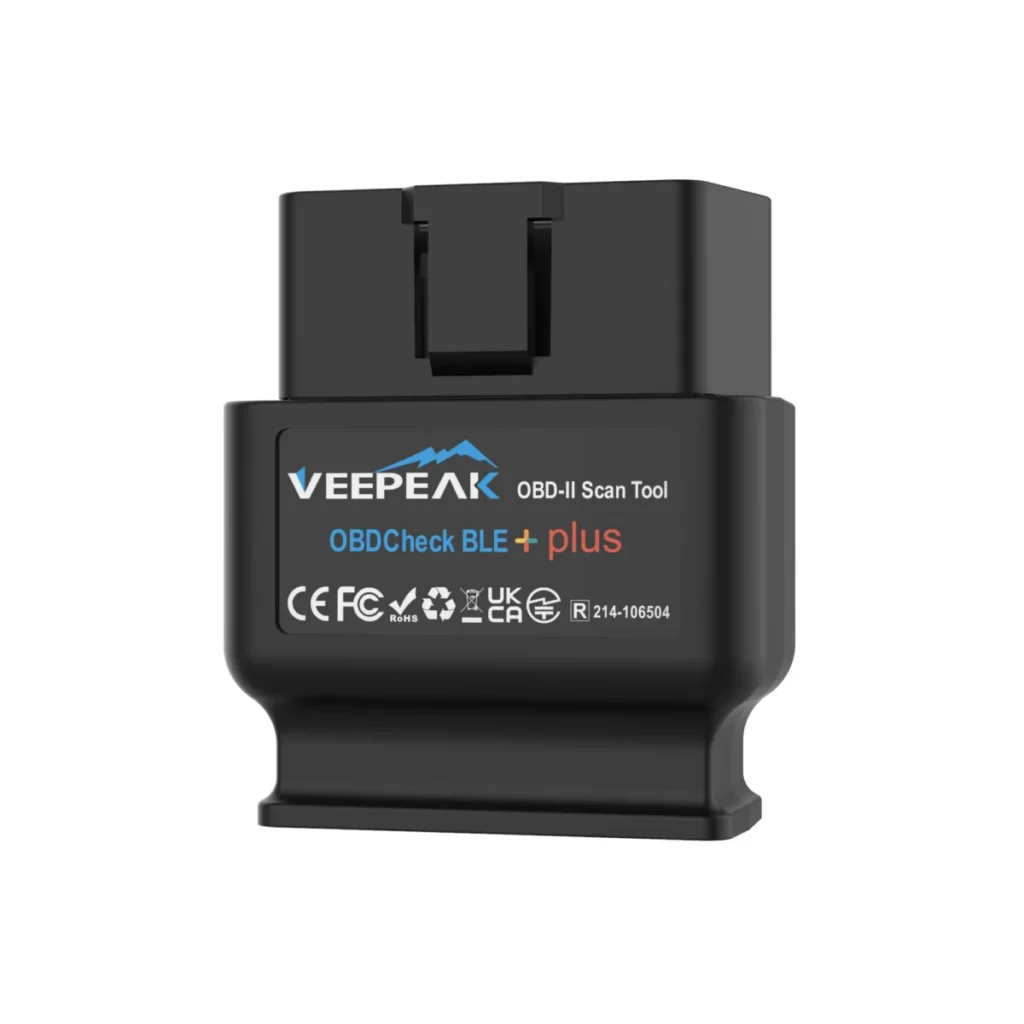
Bluetooth vs Wired OBD2 Scanner: Which Fits Your Phone, Car and Repair Job
Bluetooth OBD2 Scanner or Wired OBD2 Scanner? Compare what each type is and screen side by side, with clear rules for which…