How Much Does a Scan Tool Cost? Price Tiers by What They Can Read
Published October 29, 2026
Quick answer
How much does a scan tool cost depends almost entirely on device class. A basic engine-only code reader sits at the bottom of the market, an OBD2 scan tool with live data and enhanced modules sits in the middle, and a bidirectional scan tool with active tests, service resets and coding sits at the top. The purchase price is only part of the total: updates, subscriptions and phone apps add to it over the years you own the tool.
Table of contents13 sections · tap to expand
Key takeaways
- Price follows capability, not screen size: the jump from engine-only to ABS, SRS and transmission coverage is the biggest single step in cost.
- Bidirectional control (active tests, electronic parking brake retraction, service resets, coding) is what separates mid-range tools from shop-level platforms.
- Free lifetime updates, first-year-free subscriptions and paid phone apps change total cost of ownership more than most buyers expect.
- A Bluetooth or Wi-Fi adapter plus an app can be the cheapest route to live data, but the app and the adapter quality set what it can actually do.
- Buying above your car's needs wastes money; buying below the module with the fault wastes a purchase.
Our pick for this
Autel AL319 Code Reader
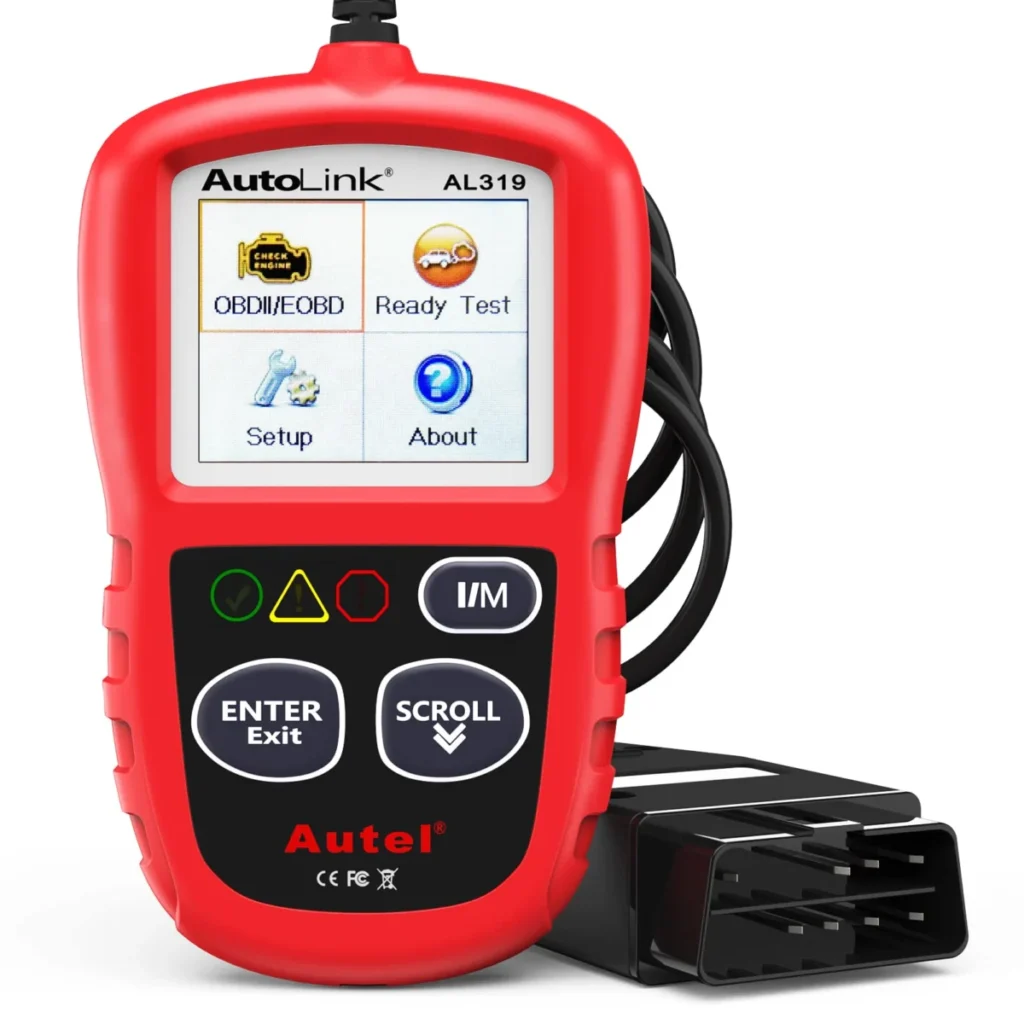
- Why we pick it: It is a wired code reader with read/clear codes, freeze frame, live data, I/M readiness, VIN, seven languages and free lifetime updates, which keeps total cost predictable.
- Best for: Reading and clearing a check engine light on a post-1996 OBD-II car at the entry tier.
- Keep in mind: Engine-only and read-only: no ABS, SRS or transmission coverage and no bidirectional control.
As an Amazon Associate we earn from qualifying purchases. This never changes which products we recommend.
Recommended products
Products that fit this
| Product | Best for | Where to buy |
|---|---|---|
| Autel AL319 Code Reader | Reading and clearing a check engine light on a post-1996 OBD-II car at the entry tier. | Check price on Amazon |
| ANCEL AD310 Enhanced Scan Tool | Reading ABS, SRS airbag and transmission codes on a 1996-or-newer vehicle, such as a used-car inspection or a dash warning light. | Check price on Amazon |
| KONNWEI KW850 Code Reader | Engine-side diagnosis with extra test functions for a DIY owner on a budget. | Check price on Amazon |
How much does a scan tool cost at each tier?
Scan tool pricing maps to four device classes, and each class has a ceiling on what it can read. A handheld code reader that reads and clears engine trouble codes is the entry tier. An OBD2 scan tool adds live data graphing and often enhanced manufacturer-specific systems.
A bidirectional scan tool adds commands sent to the car, service resets and coding. A Bluetooth or Wi-Fi OBD2 adapter has no screen and leans on a phone app, so its real capability is set by the software you pair it with.
The capability gap, not the hardware, drives the price. Every OBD2 tool reads generic powertrain codes (P codes) from the engine control module through the 16-pin diagnostic link connector. Reading ABS, SRS airbag, transmission and body modules requires enhanced coverage that varies by make, and that coverage is what mid-range and upper-tier tools charge for.
Think in tiers rather than a single number. A reader that only sees the engine is the cheapest class; a tool that reads ABS and airbag modules costs more because it carries manufacturer-specific protocols; a bidirectional tool costs more again because it can run active tests and service functions. A dongle plus app can land anywhere in that range depending on whether the app is free or paid.
For a concrete anchor at the entry tier, the Autel AL319 is a wired code reader with a 2.4-inch screen, engine-only coverage, read/clear codes, freeze frame, live data, I/M readiness and VIN, plus free lifetime updates. It shows what the bottom tier includes and, just as clearly, what it leaves out: no ABS, no airbag, no bidirectional control.
What each price tier can actually read
A code reader reads engine and emissions data only. It shows stored, pending and permanent P codes, freeze frame, live data PIDs and I/M readiness monitors. It cannot see an ABS wheel-speed fault, an airbag squib fault or a transmission code, because those live in modules outside the powertrain set that generic OBD2 exposes.
An enhanced scan tool reads those extra modules when it carries the right manufacturer coverage. That is the tier where a B, C or U code from a body, chassis or network module becomes visible on the screen instead of sending you to a shop just to learn the cause. Coverage is make-specific, so the same tool may read ABS on one brand and not another.
A bidirectional scan tool reads the same modules and also sends commands: cycling a cooling fan, running an EVAP test, retracting an electronic parking brake, bleeding ABS or performing an oil reset, battery registration, steering angle reset or DPF regeneration. Coding and adaptation, where a module accepts new configuration values, sit at the top of this tier.
The practical rule: the price step from engine-only to enhanced coverage buys diagnosis of the module that is actually lit on the dash. If your warning light is ABS or airbag, an engine-only reader cannot help no matter how much it costs.
Want to skip the research? The Autel AL319 Code Reader is the model we would start with.
Why bidirectional scan tools cost more than code readers
Bidirectional control means the tool can talk back to the car, not just listen. A code reader is read-only: it pulls data out of the ECU. A bidirectional scan tool sends actuator commands and runs active tests, which requires deeper protocol support, more vehicle-specific software and, usually, a larger development and licensing burden per make.
Service resets are part of that cost. Oil life reset, electronic parking brake retraction for a brake job, battery registration, steering angle reset, TPMS relearn, throttle relearn and injector coding each need the tool to write to a module, not merely read it. A home mechanic doing their own brakes needs EPB retraction; a reader cannot do it.
Coding and adaptation push the price higher again, because writing configuration values carries risk and demands accurate make-specific data. That is why shop-level platforms cost far more than a DIY bidirectional tool even when both can run an active test.
The tradeoff is real: if your only task is a P0420 catalyst efficiency code or a P0300 misfire, bidirectional capability adds cost you will never use. If your task is a brake job or an ABS bleed, a read-only tool cannot do the job at any price.
The ongoing cost: updates, subscriptions and apps
Purchase price is not total cost. Some tools ship with free lifetime updates, some include updates for a period the listing states, and some require a paid subscription after a first free year to keep newer vehicle coverage and functions. Read the update policy before you compare two prices, because a cheaper tool with a renewal can cost more over five years.
Phone-based setups shift cost to the app. A Bluetooth or Wi-Fi OBD2 adapter is only half the system; the app may be free, freemium or paid, and some apps charge for enhanced manufacturer coverage or service functions as in-app purchases. The adapter's chip quality also matters: genuine ELM327-based adapters behave more reliably than cheap clones, which is a quality issue rather than a price one.
Updates matter most if you keep newer cars. A tool with free lifetime updates stays useful as coverage grows; a tool with a lapsed subscription may stop supporting the newest models. For an older car, update policy matters far less than module coverage.
The Autel AL319 illustrates the simple end of this: free lifetime updates and no subscription, which keeps total cost predictable for an engine-only reader.
Adapters, OBD1 and specialty tools: the costs people forget
A Bluetooth or Wi-Fi OBD2 adapter is the cheapest hardware route to live data, but it is not a standalone scanner. It plugs into the 16-pin DLC, pairs with a phone or tablet, and does whatever the app allows. iOS support, BLE versus classic Bluetooth, and whether the app is paid all change the real cost and the real capability.
OBD1 adapter cables cover pre-1996 cars, which do not use the OBD-II standard. An adapter changes the plug, not the protocol, so you also need a scan tool that can read that car's OBD1 system. GM's 12-pin ALDL is the most common OBD1 connector, followed by Ford, Honda, Toyota, Chrysler, Nissan, Mazda and BMW patterns; buy the cable that matches your car and confirm the tool supports it.
TPMS tools are their own category. A TPMS scan tool or relearn tool triggers and reads tire sensors, and its price reflects sensor coverage and relearn capability rather than engine diagnostics. Do not expect a general OBD2 code reader to substitute for a dedicated TPMS tool on every vehicle.
These extras are where budgets quietly break. Add the adapter, the app purchase, the OBD1 cable or the TPMS tool to the headline price before you decide a tier is affordable.
Match the price tier to your car and your fault
Start from the fault, not the feature list. A check engine light with a P code needs only an engine-capable reader that reads and clears codes and shows freeze frame and readiness. A used-car inspection before purchase benefits from a tool that reads ABS, airbag and readiness monitors, because hidden module faults are exactly what a basic reader misses.
A home brake job needs electronic parking brake retraction, which is a bidirectional function. An oil change with a service reminder needs an oil reset. Neither is available on a read-only code reader, so the tier is set by the task.
A small shop comparing a mid-range bidirectional tool against a flagship platform should weigh module coverage and coding depth against update policy, because the flagship's subscription and coverage are part of its cost. A DIY owner with a 1998 car should not pay for CAN-era coverage or coding they will never use.
If you are deciding between a cheap dongle plus app and a handheld scanner, choose the handheld when you want a screen, no phone dependency and predictable updates; choose the dongle when you already have a good app and want the lowest hardware cost.
Where spending more is wasted and where spending less costs you
Spending more is wasted when the car cannot use the features. A 1998 OBD-II car with a simple P code does not need coding, adaptation or CAN-era depth. A driver who only wants to read and clear a check engine light does not need bidirectional control, and paying for it does not make the diagnosis better.
Spending less costs you when the fault lives in a module the tool cannot see. An ABS or airbag light on a used car is invisible to an engine-only reader, so the cheap purchase just delays the shop visit. A brake job that needs EPB retraction cannot be done with a read-only tool at any price.
The false economy is buying twice. If you know you will do brakes, read ABS or inspect used cars, the mid tier is cheaper than a reader now plus a capable tool later. If you know you will only chase check engine codes, the entry tier is genuinely enough.
A second false economy is ignoring update policy. A tool with a lapsed subscription can lose coverage for newer vehicles, so a slightly higher price with free lifetime updates can be the cheaper long-run choice.
Which scan tools fit each budget tier
At the entry tier, the Autel AL319 is a wired code reader with a 2.4-inch color screen, seven languages, CAN support and free lifetime updates. It reads and clears engine codes, shows freeze frame, live data, I/M readiness and VIN, and is plug-and-play for a DIY owner chasing a check engine light. Its limit is the class itself: engine only, read-only, no ABS, SRS or transmission coverage.
The KONNWEI KW850 is another entry-tier code reader, wired and engine-only, with read/clear codes, freeze frame, live data, I/M readiness, O2 sensor and EVAP tests, a battery test and a 2.8-inch LCD. It adds test functions beyond basic reading but stays inside the engine system, so it suits a DIY owner who wants more engine-side detail without paying for module coverage.
The ANCEL AD310 is listed as an enhanced scan tool with engine, ABS, SRS airbag and transmission coverage, read/clear codes, freeze frame, live data and I/M readiness, and support for CAN, J1850, ISO 9141 and KWP2000 on 1996-or-newer vehicles. That module coverage is the reason to step up from an engine-only reader, and it is the tier a used-car buyer or an owner with an ABS or airbag light should consider. Its limit is that it is read-only: no service resets and no bidirectional control.
None of these three is a bidirectional scan tool, so none can retract an electronic parking brake, run an active test or perform coding. If your task needs those, budget for the upper tier rather than expecting a reader to grow into it.
Helpful tool
ANCEL AD310 Enhanced Scan Tool

- Helps with: Reading ABS, SRS airbag and transmission codes on a 1996-or-newer vehicle, such as a used-car inspection or a dash warning light.
- Why it fits: It is listed with engine, ABS, SRS airbag and transmission coverage plus read/clear codes, freeze frame, live data and I/M readiness across CAN, J1850, ISO 9141 and KWP2000.
- Keep in mind: Read-only: no service resets and no bidirectional control, so it cannot retract an electronic parking brake or run active tests.
Avoid these
Common mistakes to avoid
- Comparing scan tools by screen size or brand name instead of by which modules they read. Check the systems list first: engine only, or engine plus ABS, SRS, transmission and body. The module coverage sets the price tier and whether the tool can see your fault.
- Treating the purchase price as the total cost. Add the update policy, any subscription after a free period, and any paid app to the price before deciding a tier is affordable.
- Buying a read-only code reader for a task that needs bidirectional control, such as an electronic parking brake retraction or an ABS bleed. Match the tool class to the task: service resets and active tests require a bidirectional scan tool, not a code reader.
- Assuming an OBD1 adapter cable makes a modern OBD2 tool work on a pre-1996 car. An adapter changes the plug, not the protocol. Confirm the scan tool itself supports the car's OBD1 system before buying the cable.
- Expecting a general OBD2 code reader to handle TPMS sensor work. TPMS triggering and relearn is a separate tool category with its own coverage and cost; budget for it separately.
Useful tools
Tools that help
As an Amazon Associate we earn from qualifying purchases. This never changes which products we recommend.
Helpful tool
KONNWEI KW850 Code Reader

- Helps with: Engine-side diagnosis with extra test functions for a DIY owner on a budget.
- Keep in mind: Engine system only, so ABS, airbag and transmission faults are not visible, and it is read-only.
Common questions
Frequently asked questions
Why are scan tools so expensive?
The price reflects vehicle-specific software, not hardware. Reading ABS, airbag, transmission and body modules, running active tests, performing service resets and coding all require manufacturer-specific data and ongoing development, and that work is what upper-tier tools charge for.
How much does a bidirectional scan tool cost compared with a code reader?
A bidirectional scan tool sits above a code reader because it can send commands to the car, not just read data. It adds active tests, service resets such as electronic parking brake retraction and oil reset, and often coding, so it costs more than an engine-only reader and is the right tier when the task needs those functions.
Does AutoZone scan cars for free?
Many auto parts stores, including AutoZone, have historically offered a free check engine light scan as a courtesy service. That service typically reads engine codes only, so it will not diagnose an ABS or airbag light, and it does not replace a tool you own for repeat use.
How much does a TPMS scan tool cost?
TPMS tools are priced as a separate category from OBD2 scanners because they trigger and read tire pressure sensors and handle relearn procedures. Cost depends on sensor coverage and relearn capability, so budget for a TPMS tool separately rather than expecting an engine code reader to cover it.
Do I need a subscription to use a scan tool?
Not always. Some tools, including the Autel AL319, include free lifetime updates with no subscription. Others include updates for a stated period and then require a paid renewal to keep newer coverage, so check the update policy before comparing prices.
Can a cheap code reader read ABS and airbag codes?
No. A basic code reader reads engine and emissions codes only, so ABS and SRS airbag faults stay invisible. Reading those modules requires an enhanced scan tool with manufacturer-specific coverage, which is a higher price tier.
Next step
Decide your tier from the fault: if you only chase check engine codes, start with the Autel AL319 and its free lifetime updates; if you need ABS, airbag or transmission codes, step up to the ANCEL AD310, which reads those modules but remains read-only.
Keep reading
Free OBD2 Code Reading: What a Store Scan Shows and What It Hides
A free OBD2 code reading gives you engine codes and little else: no ABS, airbag or live data. See what a store…
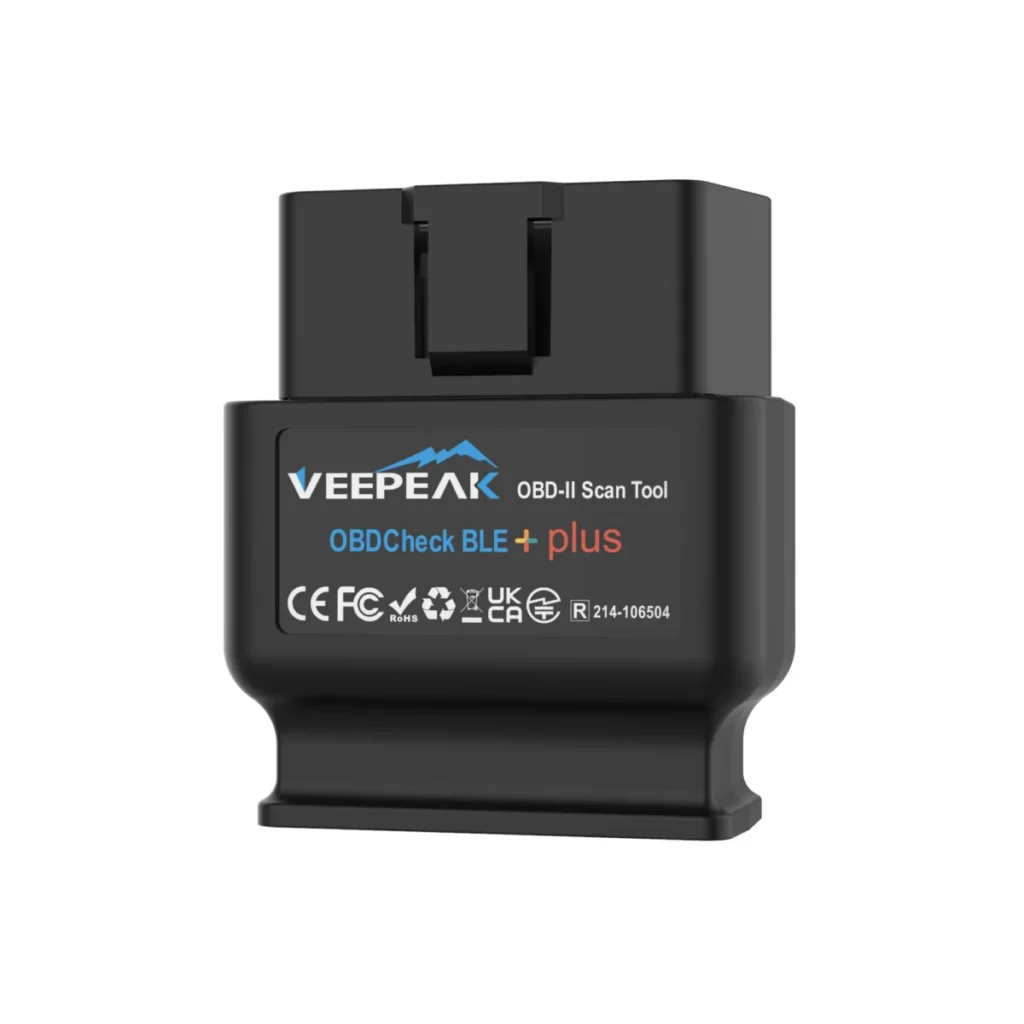
Best Bluetooth OBD2 Dongle: Match the Adapter to Your Phone and App
The Veepeak OBDCheck BLE+ is our top pick among 7 bluetooth obd2 dongles, compared on connection type, chip and protocol coverage, plus…
ANCEL vs Autel: Match the Scanner Tier to the Fault You Need to Read
Pair each ANCEL class with the closest Autel class: systems read, update costs, screens and languages, plus when neither entry model does…