ANCEL vs Autel: Match the Scanner Tier to the Fault You Need to Read
Published October 29, 2026
As an Amazon Associate we earn from qualifying purchases. This never changes which products we recommend.
Choose ANCEL when you want the most diagnostic reach for a given budget and you are comfortable with a wired handheld that reads engine, ABS, SRS and transmission data. Choose Autel when a simple, plug-and-play engine code reader with free lifetime updates and a color screen is all your check engine light requires. The deciding tradeoff is depth versus simplicity, not brand reputation.
Both brands span several tiers, from budget code readers to bidirectional scan tools, so comparing the logos tells you little. This comparison pairs the two entry-level listings directly and then explains how each brand's higher tiers change the answer for ABS, airbag, transmission and service work.
Quick verdict
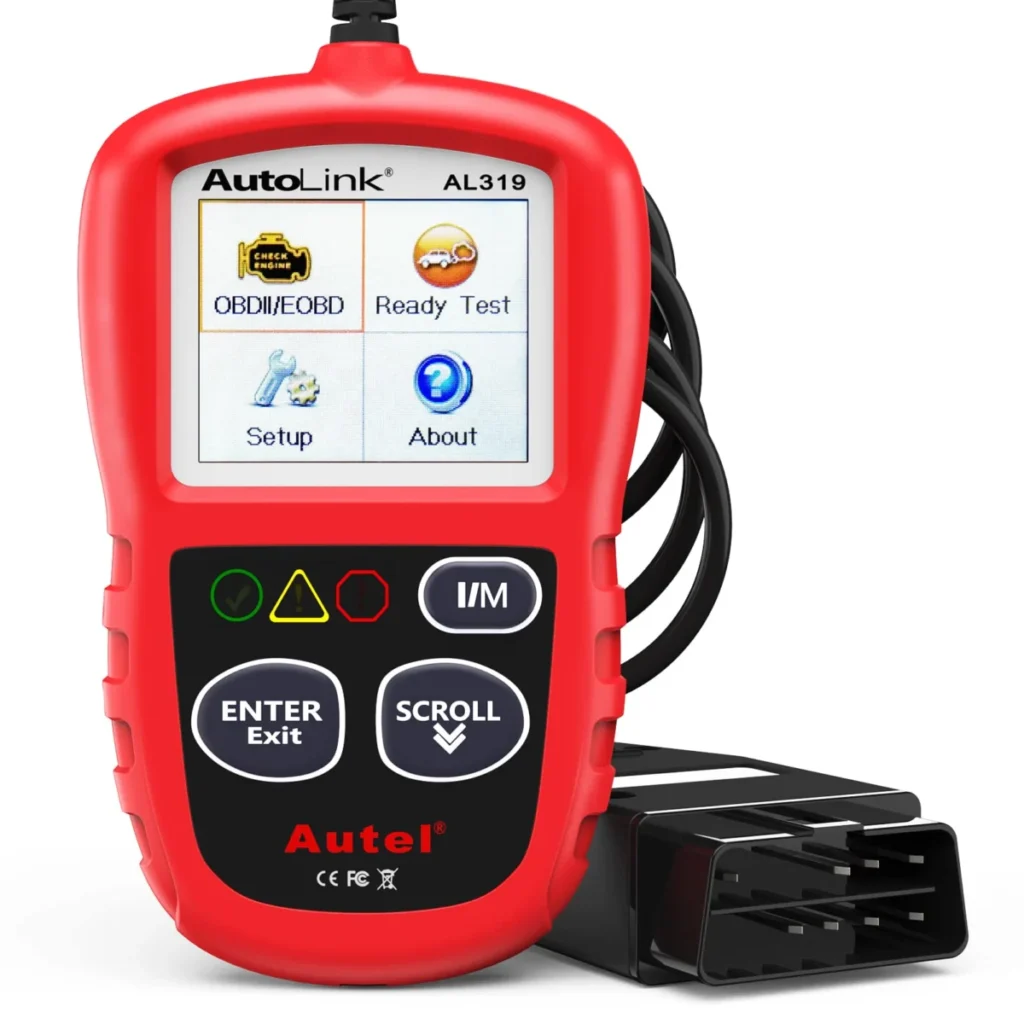
ANCEL's AD310 listing is positioned as an enhanced scan tool covering engine, ABS, SRS and transmission, while Autel's AL319 is a dedicated engine code reader with free lifetime updates. The right side depends on whether you need module coverage beyond the powertrain or a simpler tool for emissions-related faults.

ANCEL
Value-first, module-deep handhelds
Choose ANCEL if you want ABS, SRS airbag and transmission codes visible from one wired handheld at the entry price point.
Autel
Simple, polished engine readers
Choose Autel if your only job is reading and clearing check engine codes and you value a color display, seven languages and free lifetime updates.
Key takeaways
- The AD310 listing claims engine, ABS, SRS and transmission coverage, while the AL319 listing covers engine only, so the entry tier already splits on systems read.
- Neither entry model performs bidirectional active tests or service resets, so brake, EPB and ABS bleed jobs need a higher tier from either brand.
- Autel's AL319 states free lifetime updates and seven languages; ANCEL's AD310 listing makes no update claim, so confirm the policy before buying.
- The AD310 is a larger wired handheld at 8.9 x 6.9 x 1.4 inches and 12 ounces, while the AL319 is a compact 4.61 x 2.83 x 0.71 inch unit.
Table of contents8 sections · tap to expand
What is ANCEL?
ANCEL is a value-focused scanner brand whose range runs from budget code readers to mid-tier tools, with its AD310 listing pitched as an enhanced scan tool that also reports ABS, SRS and transmission data.
At a glance
ANCEL vs Autel at a glance
| Criterion | ANCEL | Autel |
|---|---|---|
| Device class and tier | Enhanced scan tool (entry tier) | Code reader (entry tier) |
| Systems read | Engine, ABS, SRS airbag, transmission | Engine only |
| Bidirectional control | No, read-only | No, read-only |
| Service resets and coding | None on the AD310; the listing notes it cannot do resets | None on the AL319 |
| Vehicle coverage | 1996 or newer OBD2; no OBD1 support | Post-1996 OBD2 vehicles with the 16-pin DLC |
| Protocols | CAN, J1850, ISO 9141, KWP2000 | CAN |
| Updates | Not stated for the AD310 | Free lifetime updates |
| Platform and connection | Wired handheld, powered from the OBD-II port | Wired handheld, no batteries needed |
| Screen and size | 2.4 in screen; 8.9 x 6.9 x 1.4 in, 12 oz | 2.4 in TFT color screen; 4.61 x 2.83 x 0.71 in |
Key differences
6 key differences between ANCEL and Autel
1. Systems read: where the entry tier already splits
The two entry listings differ on the systems they report. The AD310 is described as covering engine, ABS, SRS airbag and transmission data, while the AL319 is a code reader for engine and emissions faults. That matters because an ABS or airbag warning light will not appear on a tool that only queries the powertrain control module.
For a used-car inspection, this is the difference between seeing a wheel-speed sensor fault or an airbag squib code and seeing nothing at all. For a plain check engine light, the extra coverage changes nothing, and the AL319 does the same engine job with a color screen and a smaller body.
2. Bidirectional control and service resets: neither entry model qualifies
Neither the AD310 nor the AL319 can send commands to the car. The AD310 listing states it is read-only and cannot perform resets; the AL319 is a code reader with no active tests. Electronic parking brake retraction, ABS bleed, oil reset, battery registration and throttle relearn all require a bidirectional scan tool from a higher tier of either brand.
That is the single most common buying mistake in this matchup: a shopper buys an entry reader for a brake job and finds the EPB cannot be retracted. If your task list includes service functions, budget for a bidirectional tool rather than an entry code reader, whichever brand you pick.
3. Vehicle coverage and protocols: OBD-II only on both entry listings
Both entry models target OBD-II cars from 1996 in the US, with CAN bus mandatory from 2008. The AD310 listing names CAN, J1850, ISO 9141 and KWP2000 support, while the AL319 listing names CAN and post-1996 OBD-II vehicles with the 16-pin DLC. Neither covers pre-1996 OBD1 cars.
The AD310 listing is explicit that an OBD1 interface cannot be diagnosed even with an OBD2 adapter, so an owner of an older car should not count on either entry model. Heavy-duty trucks on J1939 and motorcycles also fall outside these listings and need different equipment.
4. Updates, languages and total cost
Autel's AL319 listing states free lifetime updates and support for seven languages, which keeps the total cost flat after purchase. ANCEL's AD310 listing makes no update statement, so the policy should be confirmed with the seller before you rely on it for long-term use.
Neither entry listing mentions a paid subscription, so the subscription question really applies to the higher tiers, where app-driven and professional tools can carry first-year-free or paid renewal terms. Check the specific model's terms rather than assuming a brand-wide policy.
5. Platform, screen and build for the intended buyer
Both are wired handhelds that draw power from the OBD-II port, so neither needs charging or a phone app. The AD310 is the larger device at 8.9 x 6.9 x 1.4 inches and 12 ounces with a 2.4 inch screen and a 2.5 foot cable; the AL319 is a compact 4.61 x 2.83 x 0.71 inch unit with a 2.4 inch TFT color display, built-in speaker and one-click I/M readiness.
For a glovebox tool, the smaller AL319 is easier to store. For a workshop bench where the device gets set down repeatedly, the AD310's larger housing and thick cable insulation are the practical argument. Neither listing describes Bluetooth or Wi-Fi, so phone apps such as Torque are not part of this pairing.
6. When neither brand's entry tier fits
Deep manufacturer-specific coding, key programming, heavy-duty J1939 work and motorcycle diagnostics sit above both entry listings. A small shop that needs module coding or guided active tests should look at each brand's bidirectional tier, not the AD310 or AL319.
If the job is only an emissions-related check engine light, either entry reader will show the stored code, freeze frame and readiness monitors. Remember that clearing codes resets the I/M monitors, and a scanner does not repair the fault or guarantee an emissions pass.
ANCEL: strengths and limitations
ANCEL's entry listing is pitched as an enhanced scan tool that reports engine, ABS, SRS and transmission data at a budget price. It is a wired handheld with broad protocol coverage, but it cannot perform resets or bidirectional tests.
Strengths
- ABS, SRS airbag and transmission coverage stated on the entry listing
- Wide protocol support including CAN, J1850, ISO 9141 and KWP2000
- Powered from the OBD-II port with no batteries or charger
- Large, clearly labelled buttons and a 2.4 inch screen
Limitations
- Read-only, with no service resets or active tests
- No OBD1 support, even with an adapter
- Update policy not stated for the AD310
ANCEL AD310 OBD2 Scanner
The AD310 is ANCEL's entry wired handheld, listed with engine, ABS, SRS and transmission coverage plus CAN, J1850, ISO 9141 and KWP2000 support. It is read-only and cannot perform resets.
Autel: strengths and limitations
Autel's AL319 is a compact engine code reader with a color display, seven languages and free lifetime updates. It is simple to use, but it reads engine and emissions faults only.
Strengths
- Free lifetime updates stated on the listing
- Seven languages and a TFT color display
- One-click I/M readiness and plug-and-play operation
- Compact 4.61 x 2.83 x 0.71 inch body with no batteries needed
Limitations
- Engine codes only, with no ABS, SRS or transmission coverage
- No bidirectional control or service resets
- CAN listed as the supported protocol on the entry model
Autel AL319 OBD2 Scanner
The AL319 is Autel's entry code reader, with a 2.4 inch TFT color display, seven languages and free lifetime updates. It reads engine and emissions codes only.
Decision guide
Which should you choose?
| If you… | Choose | Why |
|---|---|---|
| A check engine light on a 2012 sedan and you want the cheapest tool that reads and clears it | Either | Both entry listings read and clear engine codes, show freeze frame and report I/M readiness. |
| A used car with an ABS light and an airbag light you want to check before buying | ANCEL | The AD310 listing states ABS and SRS coverage; the AL319 listing covers engine only. |
| A DIY owner who wants a color screen, multiple languages and no update fees | Autel | The AL319 lists a TFT color display, seven languages and free lifetime updates. |
| A home mechanic who needs electronic parking brake retraction or ABS bleed | Either | Neither entry listing offers bidirectional control or service resets; both brands require a higher tier for that. |
| A pre-1996 car with an OBD1 connector | Either | The AD310 listing states it cannot diagnose through an OBD1 interface even with an adapter, and neither entry listing covers OBD1. |
Choose ANCEL if
- You have an ABS or airbag warning light and want to see those module codes without a shop visit.
- You want transmission codes visible from the same handheld that reads engine faults.
- You work on several makes and want broad protocol coverage including J1850 and KWP2000.
- You prefer a larger housing and a long, thick cable for repeated bench and driveway use.
Choose Autel if
- Your only task is a check engine light and you want the simplest plug-and-play reader.
- You want a color screen, multiple languages and free lifetime updates at the entry price.
- You want a compact tool that stores easily in a glovebox or backpack.
- You are buying for someone with no repair background who needs clear on-screen guidance.
See also: ANCEL FX2000 Review: Four-System Codes Without a Phone; Autel vs Launch: Which Brand to Buy at Each Budget and Job.
Common questions
Frequently asked questions
Is ANCEL and Autel the same company?
No. ANCEL and Autel are separate brands with separate product lines and support channels. Their model names and tiers overlap in purpose, which is why pairing equivalent models matters more than comparing the brand names.
Which is better for ABS and airbag codes, ANCEL or Autel?
For airbag or ABS work, confirm the specific model lists those modules, since coverage varies by tier within both brands.
Do ANCEL and Autel scanners need a paid subscription?
Neither entry listing mentions a subscription, and the AL319 states free lifetime updates. Paid or first-year-free terms appear on some higher-tier and app-driven tools, so check the terms for the exact model you buy.
Can a budget ANCEL or Autel code reader do bidirectional tests?
No. The AD310 is read-only and the AL319 is a code reader, so neither can run active tests such as an EVAP test or EPB retraction. Bidirectional control starts at a higher tier in both ranges.
Is Autel a good brand for OBD2 scanners?
Autel sells scanners across entry and professional tiers, and the AL319 listing offers free lifetime updates and a color display at the entry level. Whether it suits you depends on the tier and the systems you need to read, not the brand alone.
Which brand is better for a small shop on a budget?
A small shop needs bidirectional control and service resets, which neither entry listing provides. Compare each brand's bidirectional tier on service functions, module coverage and update terms, and skip both entry readers for shop work.
Bottom line
The verdict
The ANCEL versus Autel decision comes down to the tier and the systems you need. If ABS, airbag or transmission codes are on your list, the AD310's stated module coverage makes ANCEL the entry-tier fit. If a check engine light is the whole job, the AL319's color screen, seven languages and free lifetime updates make Autel the simpler buy.
For brake jobs, EPB retraction or shop-level diagnostics, neither entry model is enough, and you should step up to a bidirectional scan tool from either brand. Match the tool to the task first, then to the brand.
Keep reading
OBD1 vs OBD2 Scanner: Which One Your Car Needs and What to Buy
Pre-1996 cars need brand-specific OBD1 cables and code schemes; 1996-and-newer cars use one OBD2 port. Learn what each tool reads and which…

Code Reader vs OBD2 Scanner: Where the Line Falls at Live Data and ABS
Code Reader vs OBD2 Scanner compared on where the line falls: powertrain codes versus other modules and live data, with clear guidance…
Bluetooth vs Wired OBD2 Scanner: Which Fits Your Phone, Car and Repair Job
Bluetooth OBD2 Scanner or Wired OBD2 Scanner? Compare what each type is and screen side by side, with clear rules for which…