Launch Creader 3001 Review: What This Code Reader Can and Cannot Diagnose
Published October 29, 2026
As an Amazon Associate we earn from qualifying purchases. This never changes which products we recommend.
Verdict
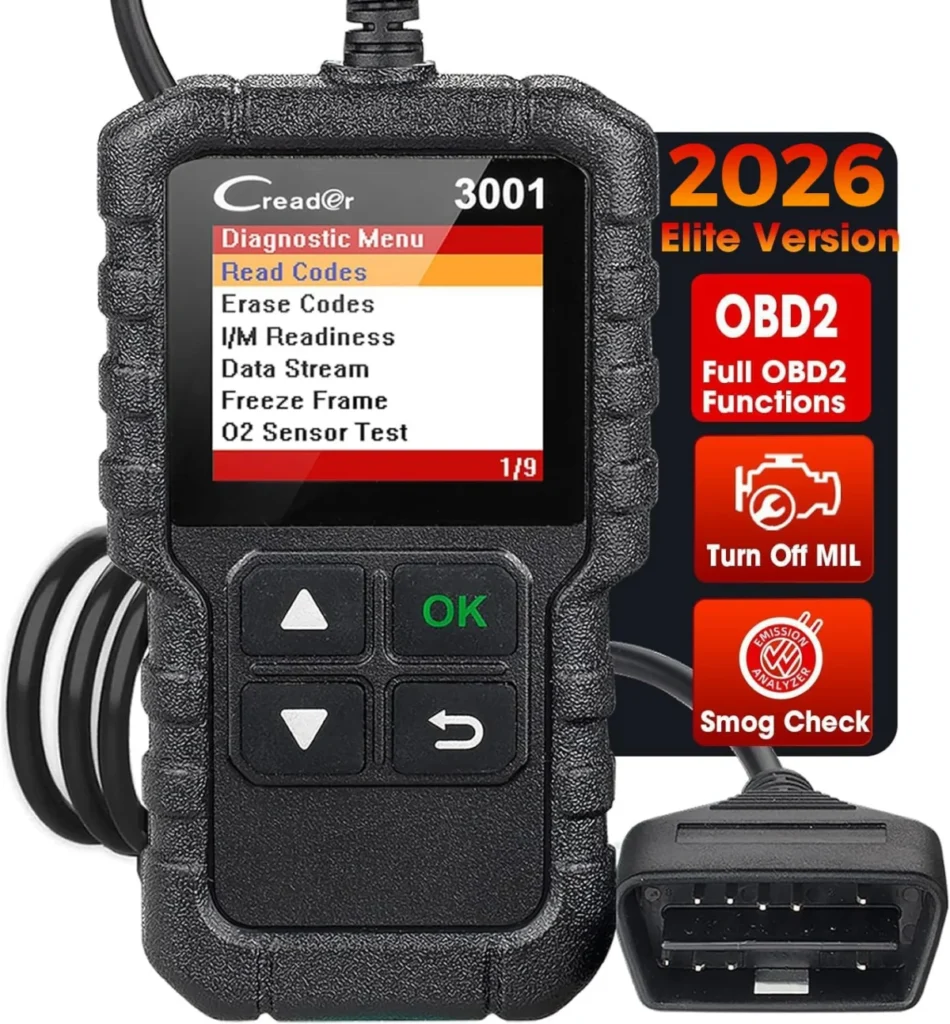
Worth considering
The Launch Creader 3001 suits a DIY owner or used-car buyer who needs to read and clear engine codes, check freeze frame and readiness monitors, and confirm a fault before paying a shop. It is not worth buying if your warning light is ABS, airbag or transmission, because this device reads the engine system only and cannot send commands or run service resets.
- Best for: Reading and clearing a check engine light on a 1996-or-newer OBD-II car, Checking I/M readiness monitors and freeze frame before an emissions test, A used-car buyer screening for stored engine codes with a low-cost handheld
- Not for: Cars with ABS, airbag or transmission warning lights, Pre-1996 vehicles that use an OBD1 connector
Key takeaways
- The Creader 3001 is a code reader, not a scan tool: it reads and clears engine codes and cannot command actuators or run service resets.
- It reads only the engine system, so ABS, SRS airbag, transmission and body module codes stay invisible to it.
- Free lifetime updates and a wired handheld design mean no phone, app or recurring fee is needed to use it.
- The main drawback is scope: any fault outside the engine and emissions systems needs a different class of tool.
Table of contents12 sections · tap to expand
The Launch Creader 3001 is a handheld, wired code reader that plugs into the 16-pin OBD-II port and works on the engine system of 1996-and-newer OBD-II vehicles. This Launch Creader 3001 review answers the practical question: it is worth buying if your problem is a check engine light, and it is the wrong purchase if your dashboard is showing a brake, airbag or transmission warning.
The tool reads and clears engine trouble codes, shows freeze frame and live engine data, reports I/M readiness monitors, runs O2 sensor and EVAP tests, and displays the VIN. Updates are free for life and no phone or app is involved. What it does not do is just as important: it cannot see ABS, SRS or transmission modules, and it cannot send commands to the car.
Specifications
Key specifications
| Specification | Detail | Why it matters |
|---|---|---|
| Type | Code reader | A code reader reads and clears engine codes but cannot perform the active tests or resets a bidirectional scan tool can. |
| Systems | Engine | ABS, airbag, transmission and body module faults will not appear on this device. |
| Bidirectional | No (read-only) | It cannot cycle actuators, retract an electronic parking brake or bleed ABS, so it is not a service tool. |
| Functions | Read/clear codes, Freeze frame, Live data, I/M readiness, O2 sensor test, EVAP test, VIN | This is the full generic OBD-II function set, which covers most check engine light diagnosis. |
| Protocols | CAN, J1850, ISO 9141, KWP2000 | It covers the OBD-II protocols used by 1996-and-newer cars, including CAN bus vehicles from 2008 onward. |
| Vehicle years | 1996 and newer | Pre-1996 cars with an OBD1 connector need a different cable and tool. |
| Updates | Free lifetime updates | There is no first-year-free subscription to renew, so the purchase cost is the whole cost. |
What the Launch Creader 3001 reads and what it cannot command
The Creader 3001 reads and clears engine trouble codes, including generic P codes such as P0420 catalyst efficiency or P0300 random misfire, and it carries a built-in code definition library so the screen explains what the number means. It also shows freeze frame data, the snapshot of engine conditions at the moment the fault set, which is often more useful than the code alone.
What it cannot do is reach beyond the engine. ABS, SRS airbag, transmission and body modules are not on its system list, so a dash warning for brakes or airbags will not produce a code here. It is also read-only: no active tests, no actuator commands, no service resets for oil, electronic parking brake or battery registration. If those tasks are on your list, you need a bidirectional scan tool.
Code depth, live data and readiness monitors
The tool handles stored and pending codes and displays live engine data (PIDs) as a stream, along with O2 sensor and EVAP test results. For a DIY owner chasing a rough idle or a fuel trim problem, that combination is enough to confirm whether a sensor reading is plausible before deciding to visit a shop.
I/M readiness monitors are where this reader earns its place for emissions season. It reports which emission-related monitors have run, including misfire and fuel system, so you can see whether the car is ready for a smog check before you drive there. Note the limit: clearing codes resets those monitors, so a fresh clear can make a car fail readiness even when nothing is wrong.
Vehicle coverage and connection type
Coverage is 1996-and-newer OBD-II vehicles, with support for the CAN, J1850, ISO 9141 and KWP2000 protocols. That spans US cars from 1996, European petrol cars under EOBD from 2001 and diesels from 2003, and CAN bus vehicles that became mandatory in the US from 2008. A pre-1996 car with an OBD1 connector is outside its reach and needs an OBD1 adapter cable plus a tool that supports it.
The connection is a fixed cable to the 16-pin diagnostic link connector, so there is no Bluetooth pairing, no app to install and no phone battery to worry about. The tradeoff is that live data appears on a 1.75-inch screen rather than a phone display, and the tool cannot log or graph over time the way a Bluetooth OBD2 adapter running an app can.
Updates, build and everyday use
Updates are free for life, which removes the subscription question that hangs over many scan tools. The unit is small at roughly 2.68 by 0.88 by 4.65 inches, powered by cable rather than a battery, and comes with a user manual and USB cable. The published warranty terms are a free exchange within one month and free repair within one year.
For a first-time scanner buyer, the appeal is that it is plug and play: connect it, turn the ignition on, and the menu walks through read codes, erase codes and readiness. The cost of that simplicity is a small screen and no phone-based graphing, so anyone who wants to watch a sensor sweep across a graph should look at an adapter-plus-app setup instead.
Code reader vs scan tool: which one does your fault need?
A code reader reads and clears engine codes. An OBD2 scan tool adds broader live data and often enhanced manufacturer-specific systems. The Creader 3001 sits firmly in the first group.
That matters when you choose. If the check engine light is on and the car otherwise drives normally, an engine-only reader answers the question. If the ABS, airbag or transmission light is on, or you need to reset an oil light or register a new battery, this class of tool cannot help and the money is better spent on a bidirectional scan tool or a trip to a shop that has one.
Why clearing a code does not fix the car or guarantee a smog pass
Clearing a code turns off the check engine light, but it does not repair anything. The underlying fault usually returns, and in the meantime the clear has wiped the freeze frame and reset the I/M readiness monitors, which is exactly what an emissions test checks. A car with unset monitors can fail a smog check even when no fault is present.
A code also points to a circuit or system, not always to a failed part, so a P0420 does not automatically mean a new catalytic converter. Treat the reader as a diagnostic starting point. For brake, airbag, steering or oil-pressure warnings, do not keep driving on the assumption that a cleared code made things safe; have the car checked by a qualified mechanic.
Strengths and weaknesses
Pros and cons
Pros
- Reads and clears engine codes with a built-in definition library, so the fault is explained on screen
- Shows freeze frame, live engine data, O2 sensor and EVAP test results, and VIN
- Reports I/M readiness monitors, which helps you judge emissions-test readiness before driving to the station
- Free lifetime updates with no subscription or app to manage
- Wired handheld design needs no phone, pairing or battery
Cons
- Engine system only: no ABS, SRS airbag, transmission or body module codes
- Read-only, with no bidirectional tests, actuator commands or service resets
- Small 1.75-inch screen and no phone-based graphing or logging
- Does not cover pre-1996 OBD1 vehicles
Other options
Alternatives to consider
Autel AL319
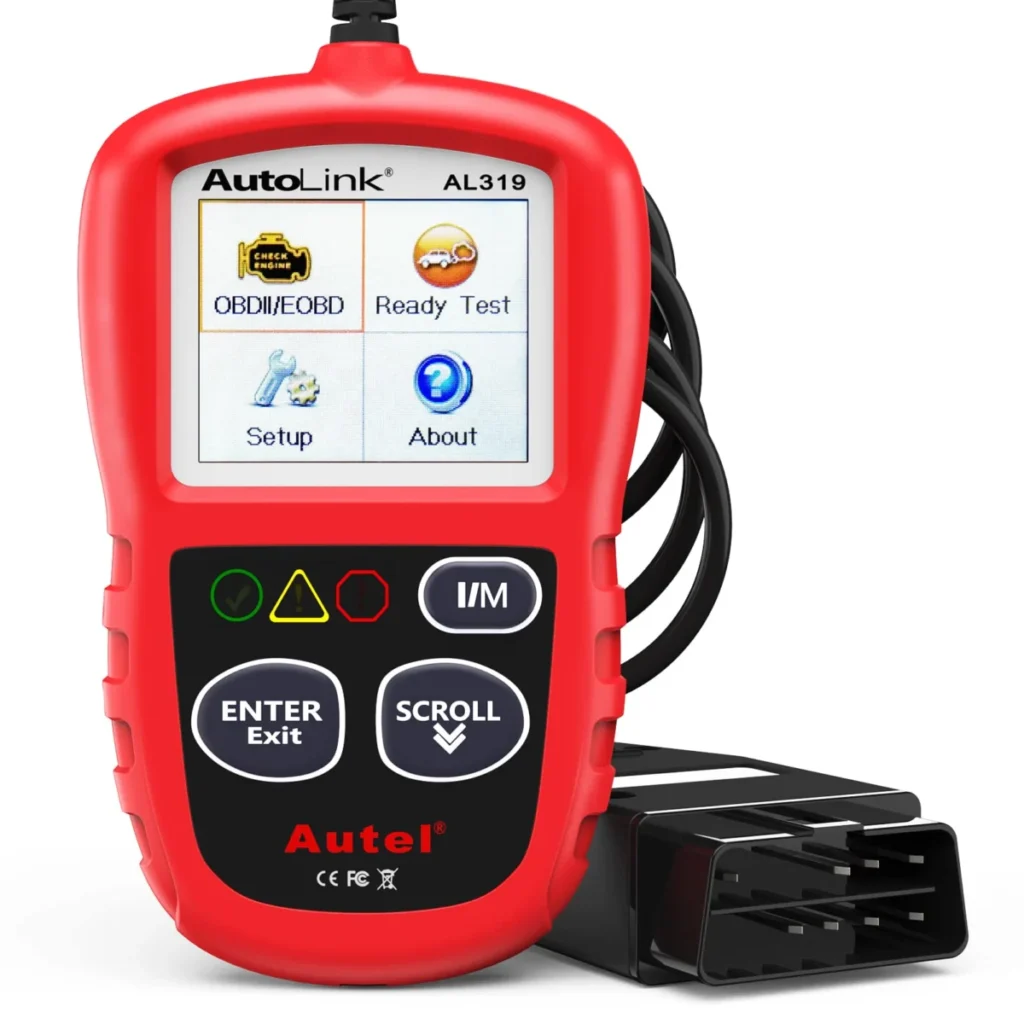
Choose the Autel AL319 if you want a comparable engine-only code reader with 7 language options and a simpler feature set for a first-time user.
KONNWEI KW850

Choose the KONNWEI KW850 if you also want a built-in battery test alongside engine code reading, accepting that its update period is not stated.
See also: Autel vs Launch: Which Brand to Buy at Each Budget and Job.
Common questions
Frequently asked questions
Can the Launch Creader 3001 read ABS or airbag codes?
No. The Creader 3001 reads the engine system only, so ABS, SRS airbag, transmission and body module codes do not appear on it. A dash warning for brakes or airbags needs a scan tool with enhanced module support, or a shop that has one.
Does the Launch Creader 3001 need a subscription or paid updates?
No subscription is required. Updates are free for life, so the purchase price is the whole cost and there is no first-year-free renewal to track. That is a real advantage over tools that charge for updates after the first year.
Will the Launch Creader 3001 work on my car?
It works on 1996-and-newer OBD-II vehicles using the CAN, J1850, ISO 9141 or KWP2000 protocols, which covers US cars from 1996 and EOBD cars from 2001.
Can the Launch Creader 3001 clear the check engine light for good?
It clears the code and turns off the light, but it cannot fix the fault, so the light often returns once the car re-runs the monitor. Clearing also resets readiness monitors, which can affect an emissions test. Repair the cause, then clear.
What is the difference between the Creader 3001 and a Bluetooth OBD2 adapter?
The Creader 3001 is a self-contained handheld with its own screen and cable, so no phone is needed. A Bluetooth OBD2 adapter has no screen and relies on a phone app, which usually offers better graphing and logging but adds pairing and app cost to the setup.
Can a code reader help a car pass an emissions or smog test?
It helps you prepare, not pass. The Creader 3001 shows I/M readiness monitors so you can see whether the car is ready before you drive to the station, but clearing codes resets those monitors and no scanner can guarantee a pass. Fix the underlying fault first.
Bottom line
Should you buy the Launch Creader 3001?
Buy the Launch Creader 3001 if your problem is a check engine light on a 1996-or-newer OBD-II car and you want a wired, app-free reader with freeze frame, live data, readiness monitors and free lifetime updates. It does the generic OBD-II job completely and without recurring cost.
Skip it if any warning light on your dash is ABS, airbag or transmission, or if you need active tests, service resets or module coding, because this device reads the engine only and cannot command the car. In that case, put the budget toward a bidirectional scan tool or a shop visit, and consider the Autel AL319 or KONNWEI KW850 only if you are staying in the engine-only class.
Keep reading
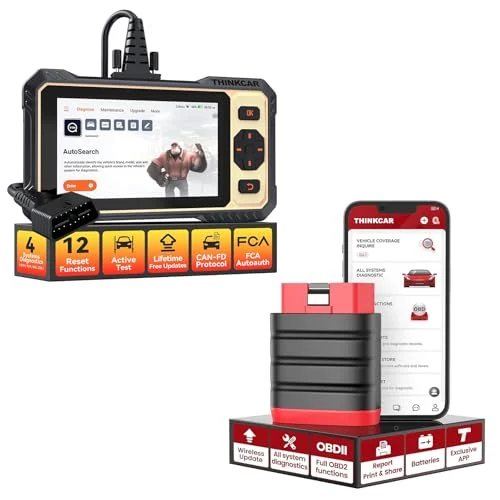
THINKCAR ThinkDiag Review: All-System Diagnostics and Active Tests on Your Phone
THINKCAR ThinkDiag review: dealer-style all-system codes and active tests on iOS or Android, with no built-in screen and no support for pre-1996…
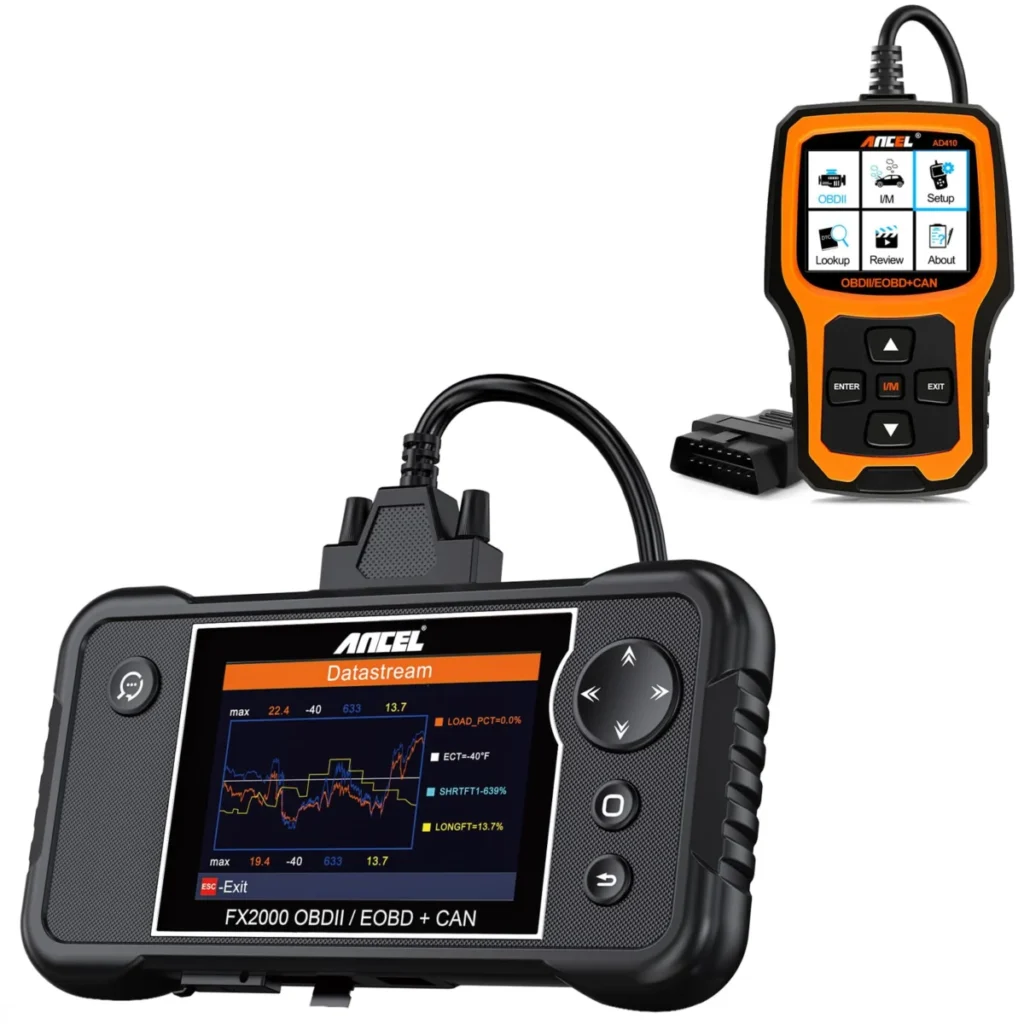
ANCEL FX2000 Review: Four-System Codes Without a Phone
Is the ANCEL FX2000 worth it? Our review weighs device class, systems read and bidirectional control, its pros and cons, and who…
THINKCAR ThinkScan Plus Review: What It Reads and Where It Stops
THINKCAR ThinkScan Plus review: device class, systems and bidirectional control, honest pros and cons, and a clear verdict on who should buy…